




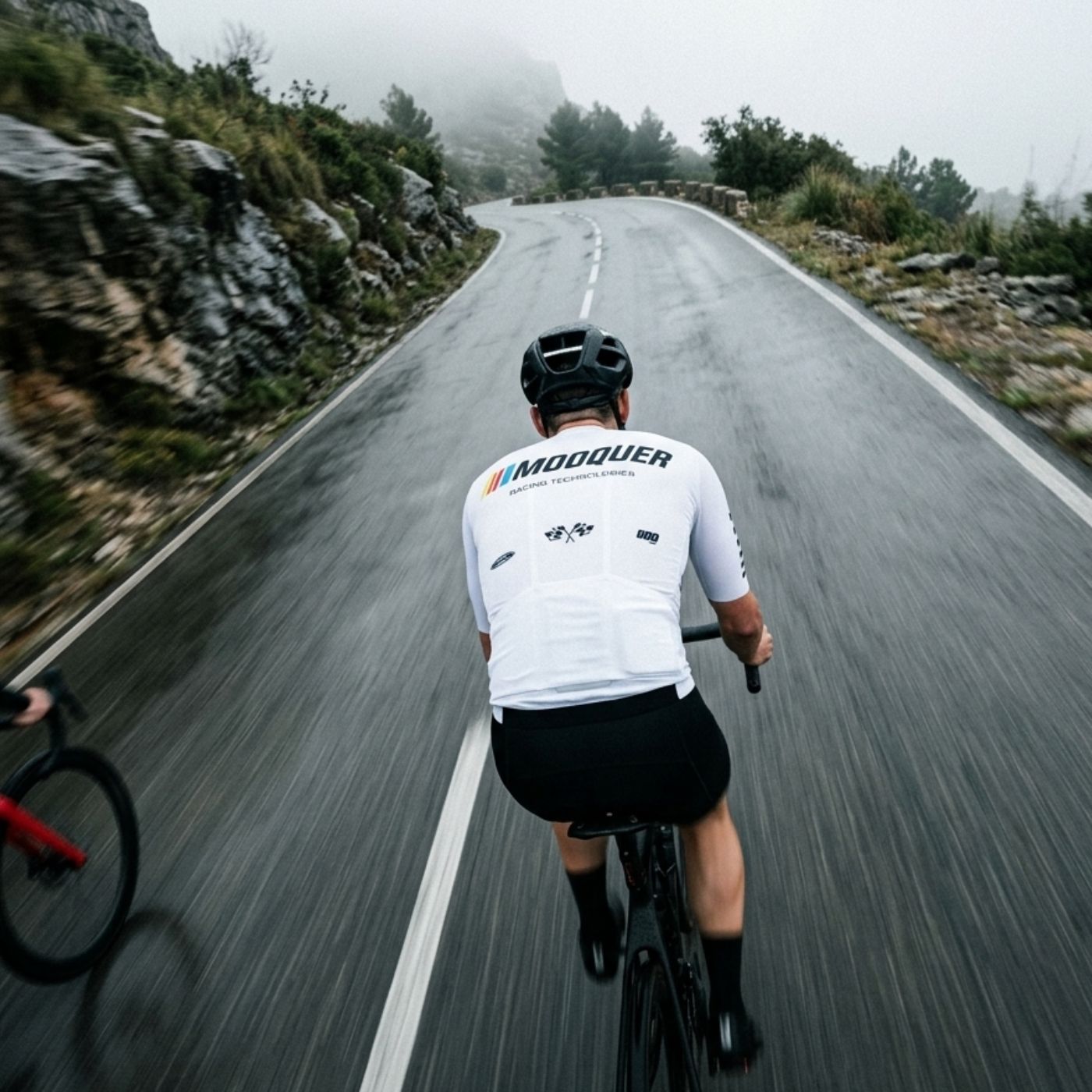
Road and gravel cycling helmets, selected for three things: that they offer real protection, that they ventilate when needed, and that they are lightweight. All are certified according to the European EN 1078 standard, which is the legal minimum for riding, and with rotational impact protection systems in the models that include them.
That last part is what has changed the most in the last decade and what is explained the least. A real fall is not a perpendicular blow: you fall on your side, the helmet scrapes the asphalt, and your head rotates. That rotation is what the brain tolerates worst, and it is exactly what the classic certification did not measure. We explain it all in what MIPS is and why a certified helmet may not be enough.
How to choose a helmet size
The circumference of the head is measured with a tape measure, above the eyebrows and around the widest part of the skull. The usual sizes range from 52 to 62 centimeters: S for 52-55, M for 55-59, and L for 59-62. If you are between two sizes, try both. A well-adjusted helmet does not move when you shake your head with the strap buckled, and one that moves protects less no matter how much technology it has inside.
What to look for before buying
The weight is felt in the neck on long rides: below 280 grams you are on lightweight territory. Ventilation matters more when climbing slowly than when riding fast, because that is when there is no relative air to move the heat; look for through-channel internal vents, not just holes. And the retention system, the dial at the back of the head, is what makes the difference between a helmet you forget you are wearing and one that ends up in the trunk.
Two rules that almost no one knows: a helmet that has received a blow is always replaced, even if nothing is visible on the outside, because the inner foam has already deformed; and even if you have never fallen, it is advisable to change it every three to five years due to material degradation.
At the store in Oviedo you can try them on without rushing and measure your head. Shipping throughout Spain.

