





Article: What is MIPS and why a certified helmet may not be enough
What is MIPS and why a certified helmet may not be enough
There is one question more people should ask themselves before buying a helmet: if they are all certified and all meet the same standard, why do some cost 40 euros and others 300?
Part of the answer is brand, finish, and weight. But there is a technical part worth understanding.
The fall you imagine is not the fall that happens
When we think of a blow to the head, we imagine a clean impact: the head goes down vertically and hits the ground. That is the blow measured by certifications, and it is the one a conventional helmet absorbs perfectly by deforming its foam.
The problem is that this blow almost never exists in reality. When you fall off your bike, your body has horizontal speed: the helmet hits the asphalt at an angle, scrapes, and the head rotates. This sudden rotation subjects the brain to rotational acceleration that the foam does not cushion, because the foam is designed to compress, not to slide.
And the brain tolerates rotation much worse than compression. It is the line of research that has changed helmet design in the last decade, not only in cycling: also in skiing, motorcycling, and American football.

What exactly the MIPS layer does
MIPS stands for Multi-directional Impact Protection System, a system developed in Sweden. In practice, it is a low-friction layer placed between your head and the inside of the helmet, held by elastic anchors.
Its function is simple to describe: in an oblique impact, it allows the helmet to move a few millimeters relative to the skull before dragging it. This small slide absorbs part of the rotational energy instead of transmitting it directly to the brain.
It does not add protection against linear impact, which is already covered by the foam. It solves the other vector, the one the standard did not measure.
What it does not do
It is best to be honest here, because safety marketing tends to overpromise.
MIPS does not make a fall harmless or guarantee that you won't get hurt. It does not replace riding with your head on straight, looking before opening, or carrying lights. And a poorly fitted helmet with MIPS protects less than a well-fitted helmet without MIPS: if the helmet moves when you shake your head with the strap buckled, the system inside doesn't matter.
It is also not the only solution to the problem. Other brands have developed their own systems with the same goal and different engineering. MIPS is simply the most widespread and the easiest to identify.

How to know if your helmet has it
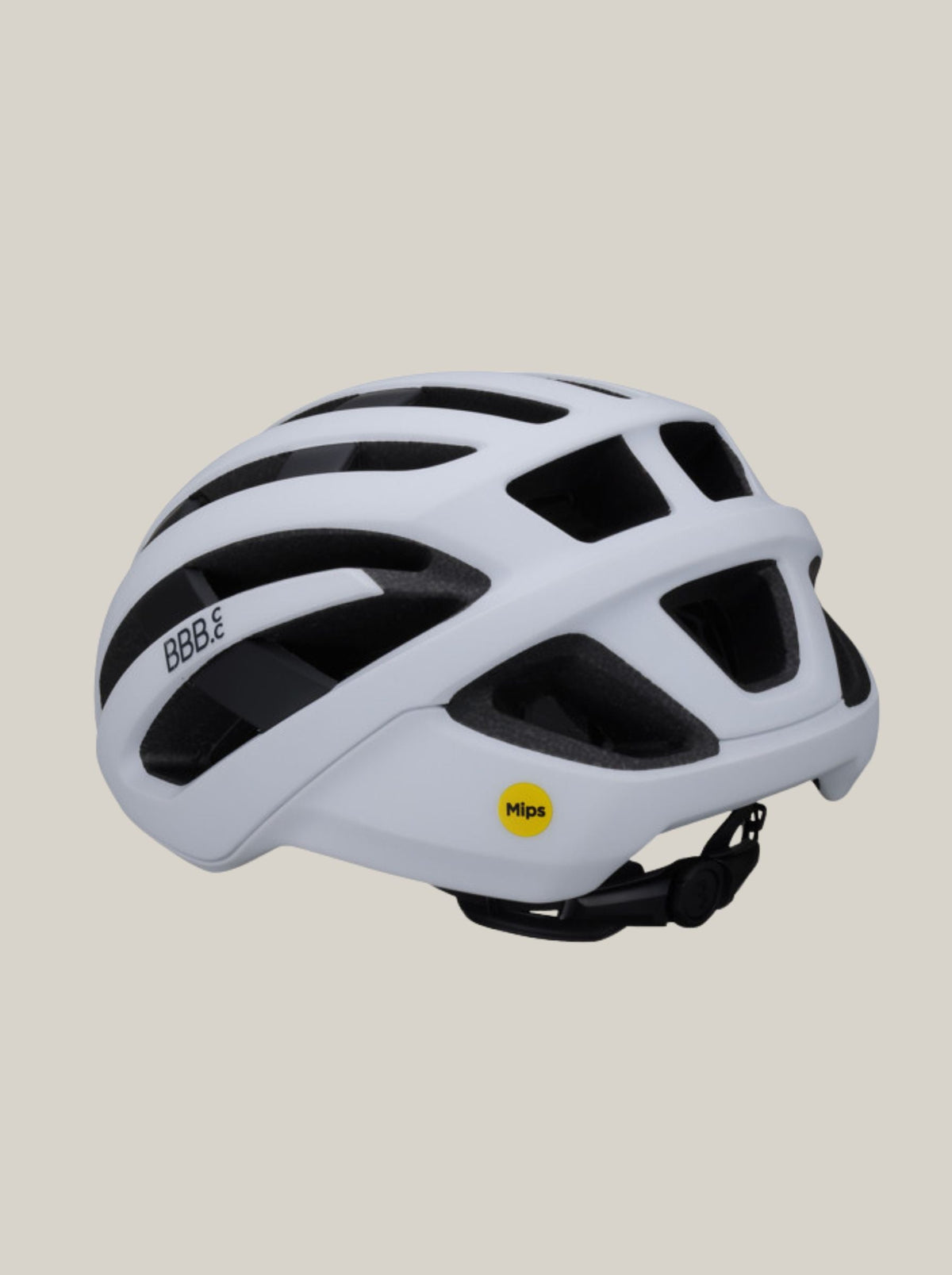
Look inside. The MIPS layer is usually a thin sheet of plastic, normally yellow, visible between the pads and the foam. And helmets that incorporate it have a small yellow sticker on the outside back.
If your helmet is more than five or six years old, it is quite likely that it does not have it: its mass adoption in the mid-range is recent.
When it is time to change your helmet
While we are at it, two rules that many people do not know.
After a blow, the helmet is thrown away. Even if nothing is visible on the outside. The foam absorbs the energy by deforming, and once deformed, it no longer returns to its original state even if the shell looks intact. A hit helmet is a worn-out helmet.
And even if you haven't fallen, manufacturers recommend replacing it every three to five years. Sweat, UV rays, and trunk heat degrade expanded polystyrene. It is not a commercial strategy: it is chemistry.
How much do you have to spend?
A cheap certified helmet protects. What you buy by going up in price is, in this order, less weight, better ventilation, better fit, and rotational protection systems.
Of those four, the one that affects most whether you wear it properly is the fit, and the one that affects most whether you always wear it is ventilation. A helmet that makes you hot ends up in the trunk.
The jump that is worth seeking is in the mid-range: there you already find MIPS, decent ventilation, and weights around 260 grams without paying for a World Tour team sponsorship.

Frequently asked questions
What does MIPS mean in a helmet?
Multi-directional Impact Protection System. It is a low-friction layer between the head and the helmet that allows it to move a few millimeters in an oblique impact, absorbing part of the rotational energy.
Is it worth paying more for a helmet with MIPS?
It addresses a type of impact, the oblique one with rotation, which is the most common in real falls and which classic certifications did not measure. Today the extra cost in the mid-range is small, so the question usually answers itself.
How do I know if my helmet has MIPS?
Look inside: you will see a thin sheet, normally yellow, between the pads and the foam. Compatible helmets also have a yellow sticker on the back.
Do you have to change the helmet after a fall?
Yes, always, even if no external damage is visible. The inner foam deforms by absorbing the impact and loses its protection capacity even if the shell looks intact.
How often should a cycling helmet be changed?
Between three and five years even if it has not suffered blows. Sweat, sunlight, and heat progressively degrade the inner material.
What helmet size do I need?
The head circumference is measured with a measuring tape, above the eyebrows and around the widest part of the skull. Usual sizes range from 52 to 62 centimeters. If you are between two, try them: fit trumps the chart.
The one we have
We work with the BBB Karma MIPS Air Node: 25 vents with through channels, around 260 grams, and MIPS system, in sizes S, M, and L. You can see it along with the rest in cycling helmets.
And if you prefer to try it before, in the Oviedo store you have the three sizes to measure yourself without rushing.









Leave a comment
This site is protected by hCaptcha and the hCaptcha Privacy Policy and Terms of Service apply.