





Article: 32-Inch Wheels: Why They're Going to Take Over

32-Inch Wheels: Why They're Going to Take Over
A few months ago, I recorded a video saying that 32-inch wheels were here to stay. My channel exploded, hundreds of new subscribers joined, and my comments section filled with people calling me a sellout. Months later, I still think the same thing, and now I also have data.
Let me state something upfront: I don't sell 32-inch wheels. I don't have any agreement with any wheel brand. I haven't even tried them yet. I'm speaking to you as a cyclist, after twenty years of competing in cyclocross, mountain biking, gravel, duathlon, and trials.
I've seen cantilever brakes, U-brakes, narrow handlebars, 1.7 tires, rigid bikes, and toe clips come and go. Every time something new arrived, the sector divided between those who tried it and those who explained in the comments why it was silly. And each time, the new thing won.
It's no longer a theory: it's winning races
Without data, this is just talk, so let's start there.
In Cape Epic, there's already a victory with 32-inch mountain bike wheels. And in gravel, where everything is moving fastest, 32-inch wheels are making it to podiums in major races. The latest reference I've seen is the beautiful 32-inch Scott gravel bike, winning one of the most important races on the US calendar.
At the same time, many brands are developing specific frames, widths, and tires. And superboost hubs are coming in strong, which exist precisely to allow for this size.
When the industry starts manufacturing new standards around a certain size, that size isn't going away.
The problems that remain unresolved
However, the fact that they will become dominant doesn't mean they are fully resolved. There are four things the industry needs to fix, and it's worth mentioning them.
- Lateral stiffness. A 32-inch wheel is nothing like a 29-inch wheel in a turn, let alone a 26-inch wheel. There's much more lateral force at play, so spokes and hubs will need to be reinforced: higher hub flanges, perhaps more spokes per wheel. That remains to be seen.
- Small sizes. With a 29-inch wheel, an XS frame was practically all wheel. With a 32-inch wheel, the problem is multiplied. The solution that's emerging is the supermullet: 32 inches in the front and 29 inches in the rear. It works, but it's a patch, and we'll have to see if it stays or if it's eventually resolved through geometry.
- Geometry. What reach will we have? What attack position? How does the head tube look? 29-inch wheels already brought much shorter stems, 80, 70, or less, and often with a negative angle. I remember using a 120mm, zero-degree Ritchey WCS stem on an aluminum Marin twenty years ago. With 32-inch wheels, the trend will go even further in that direction, and head tubes will have to drop significantly.
- And the price, which no one knows where it will settle yet.
Why they will win anyway
The advantages reported by those who have already tried them are the same ones that 29-inch wheels brought compared to 26-inch wheels: faster uphill, faster downhill, more control, and unparalleled traction, they say.
And there's a non-technical factor that will outweigh all the others combined. When you go to buy a new bike and you have a 29-inch and a 32-inch bike in similar conditions, you'll think about resale. You'll ask yourself which of the two you'll be able to sell in three years. And that question answers itself.
Furthermore, leading enduro, downhill, and e-bike brands in the US are already incorporating them, along with the supermullet. When downhill adopts something, it's usually because it really works.
If you're 6'1" like me, this will also be a clear improvement.
How long
My prediction, and it is a prediction:
Nothing will happen in 2026 and 2027. They will gradually appear in high-end ranges and new releases.
In three or four years, they will truly enter the general market.
And in five or six years, there will be no option, just as there isn't today if you want to buy a 26-inch or 27.5-inch bike. It's not that they are worse: it's that they don't exist.
The thought I close with
What I don't understand is the hate.
If something is better for everyone, what's the problem? I don't hate gravel, or e-bikes, or 32-inch wheels. I like bikes. And if I can ride the same trails I rode twenty years ago, faster, with more traction and more safely, I can't find a single reason not to want it to exist.
Just because you don't have to change your bike now doesn't mean the standard is bad. It means you have time to enjoy yours, which is what matters.
We'll talk in the next one. And you know: the key is to be cool, not to win races.
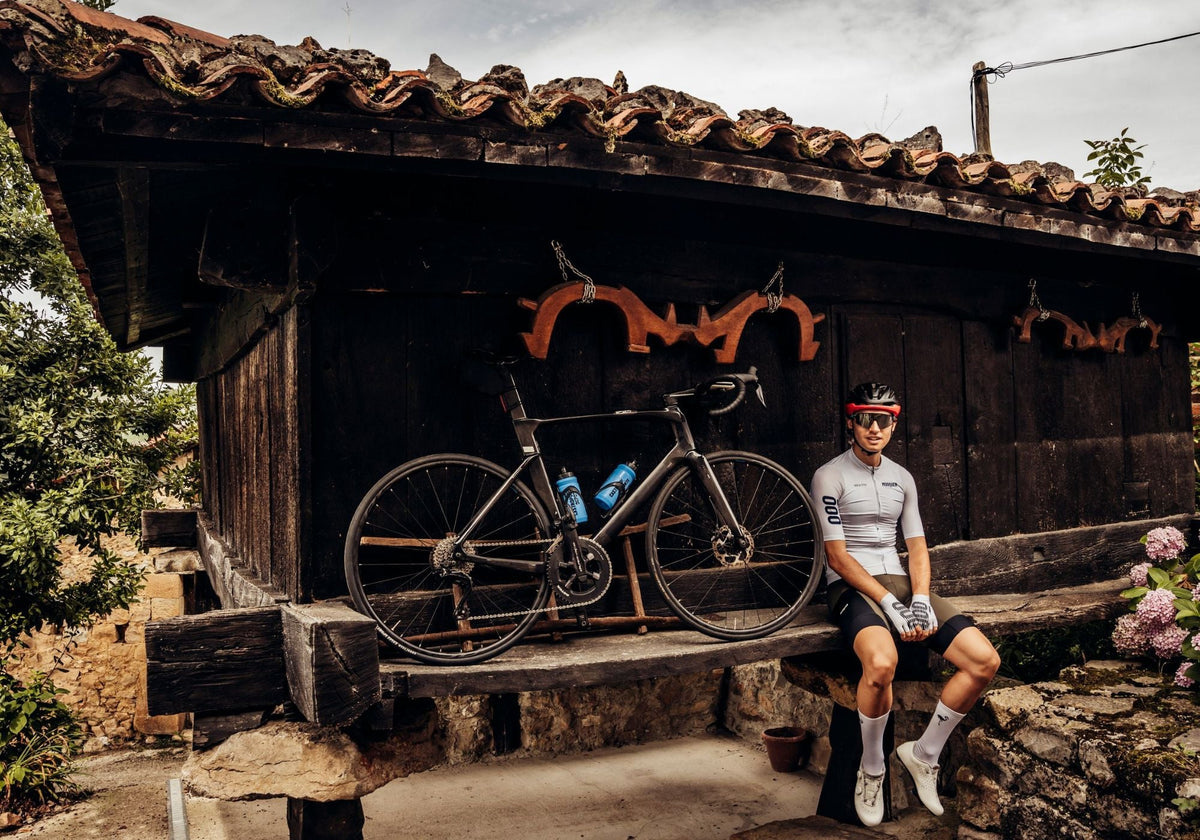
This podcast is sponsored by Mooquer, which is our family brand of cycling, running, and trail clothing manufactured in Spain, Italy, and Portugal.










Leave a comment
This site is protected by hCaptcha and the hCaptcha Privacy Policy and Terms of Service apply.