



Built-in briefs in running shorts: when you need them and when they get in the way
Short answer: if you run for less than an hour, you don't need it. If you're going to be active for more than two hours, the inner brief stops being an extra and becomes the deciding factor in whether you finish comfortably or chafe.
Here's the long explanation, and at the end, I'll tell you the difference between our two models, which are the same shorts except for this.
What exactly does the inner brief do?
Three things, and only the first one is obvious.
It provides support. It prevents chafing between the thighs, which is why most people look for it. And it keeps the outer fabric separated from the skin, which is what almost no one mentions and what matters most over long distances: when the outer shorts stick to sweat, they stay stuck, and from there, everything gets worse.
A well-made inner brief is made of elastic lycra, with no seams in friction areas and no elastic or silicone on the quadriceps. This detail matters more than it seems: most briefs have an elastic band at the bottom that squeezes the thigh to prevent them from riding up, and after two hours, that elastic is precisely where it starts to bother you. If the brief is well-patterned, it doesn't need it.
When is it beneficial?
For long distances. After two hours, accumulated friction stops being an annoyance and becomes an injury.
If you sweat a lot. It's not a matter of physical fitness, it's physiology. Some people have their shorts sticking after forty minutes, and others are still dry after three hours.
In the mountains. Uneven terrain forces movements you don't make on asphalt: short strides uphill, wide stance downhill, jumps. All of this increases rubbing.
If you're carrying weight. With two full soft flasks, gels, and your phone, your shorts can sag and move. The inner brief helps stabilize them.
When is it a hindrance?
For short runs and workouts. Less than an hour, at a high pace and in hot weather, it's an extra layer that doesn't add anything and retains heat.
If you already run with technical underwear. Layering an inner brief and technical briefs doesn't add, it subtracts. Choose one of the two.
In extreme heat. Above eighty-six degrees Fahrenheit, every layer counts. Many people who use inner briefs nine months a year abandon them in July and August.
If it shows. It's an aesthetic reason and perfectly valid.
The problem almost no one solves: sagging shorts
Go to any race and look at people after the six-mile mark. You'll see many running with their shorts half-way down their buttocks.
It's not that they're too big. It's that they're carrying two soft flasks, a phone, gels, and car keys stuffed into pockets that aren't designed for that weight, and the waistband gives way.
There are two solutions, and almost all brands have abandoned the first one: the drawstring. It seems old-fashioned, but there's nothing that adjusts better than a well-placed drawstring, and many brands have eliminated it for design reasons. We keep it.
And the second comes from cycling: an internal silicone strip on the waistband. It's the same thing cycling shorts and jerseys have to keep them from moving, and in loaded shorts, it works exactly the same way. In contact with the skin, the waistband stays put.
That combination, drawstring plus silicone, is why you can load the pockets without the shorts falling down.
The belt, inside the shorts
Most trail runners end up buying a separate soft-flask belt. Another garment, another thing to put on, another thing that moves.
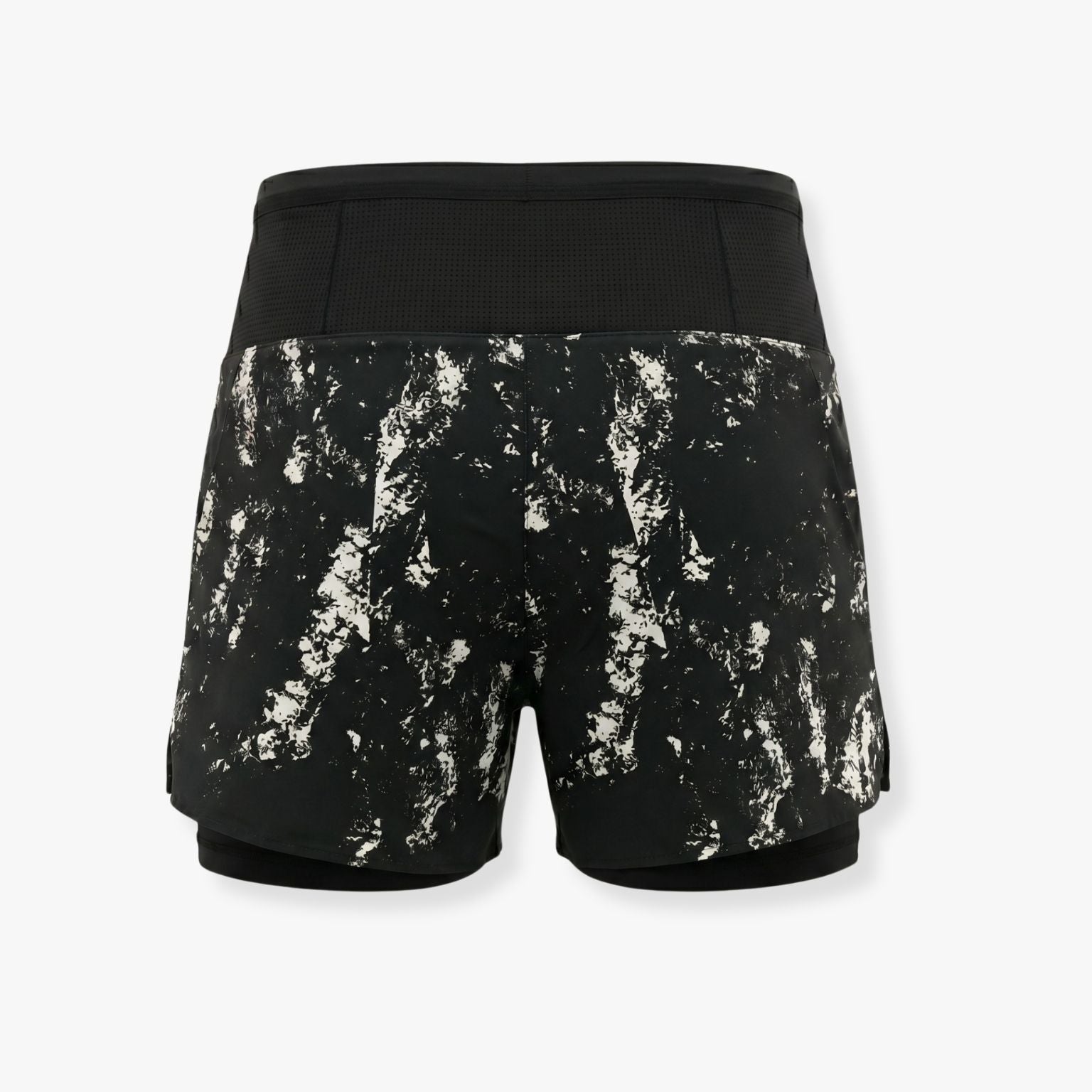
We have integrated it into the waistband itself. Elastic mesh side pockets with real capacity for soft flasks and gels, and a back pocket inside the mesh with a Japanese YKK self-locking zipper: if you turn the puller to one side, it won't open no matter how much you pull; if you turn it to the other, it opens with one finger. This allows you to reach in and grab keys or a card while running, without stopping, and without fear of it opening on its own on a descent.
It's a small detail that comes from cycling and is rarely seen in trail running.
Our case: Alba and Eclipse
We make both because there isn't one good answer for everyone.
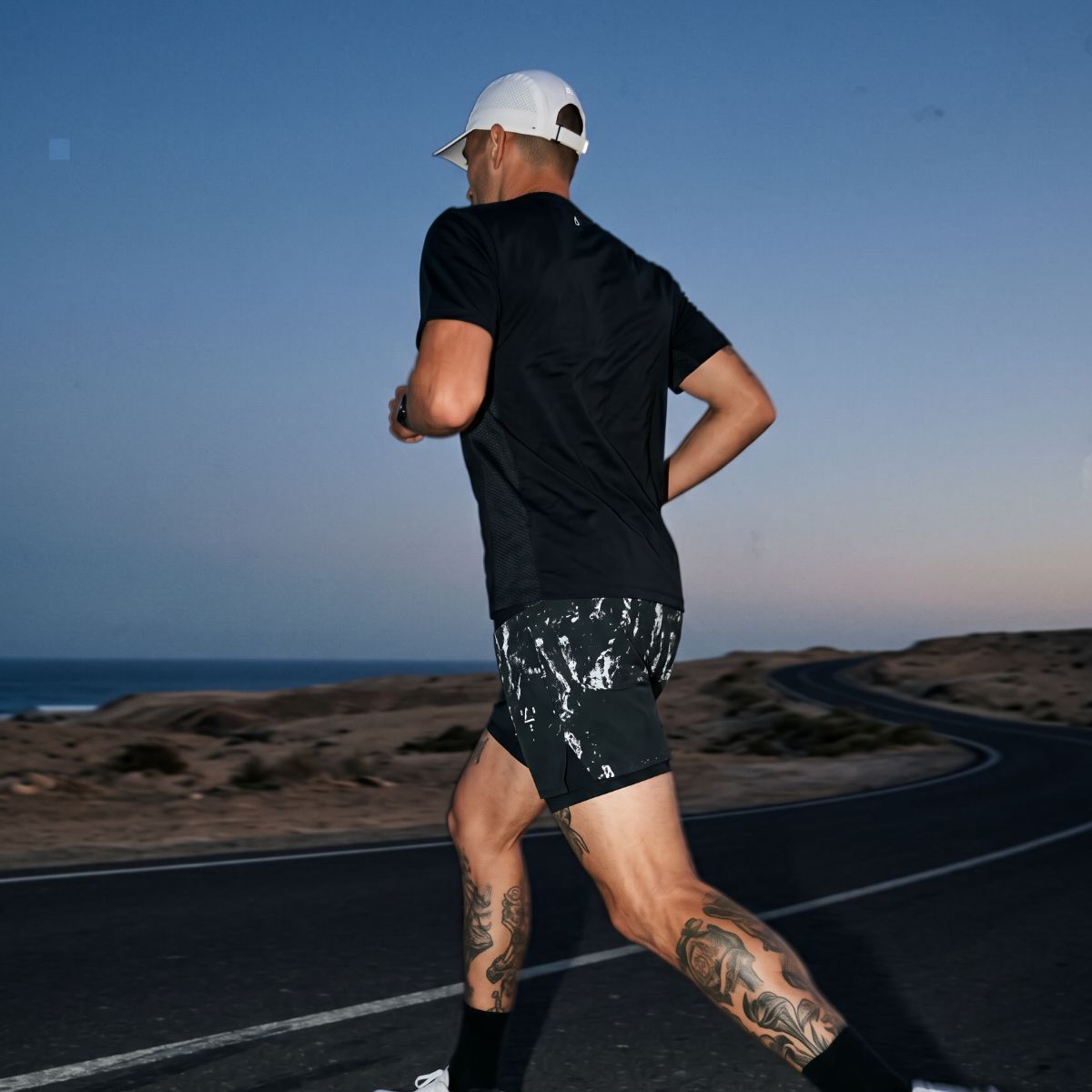
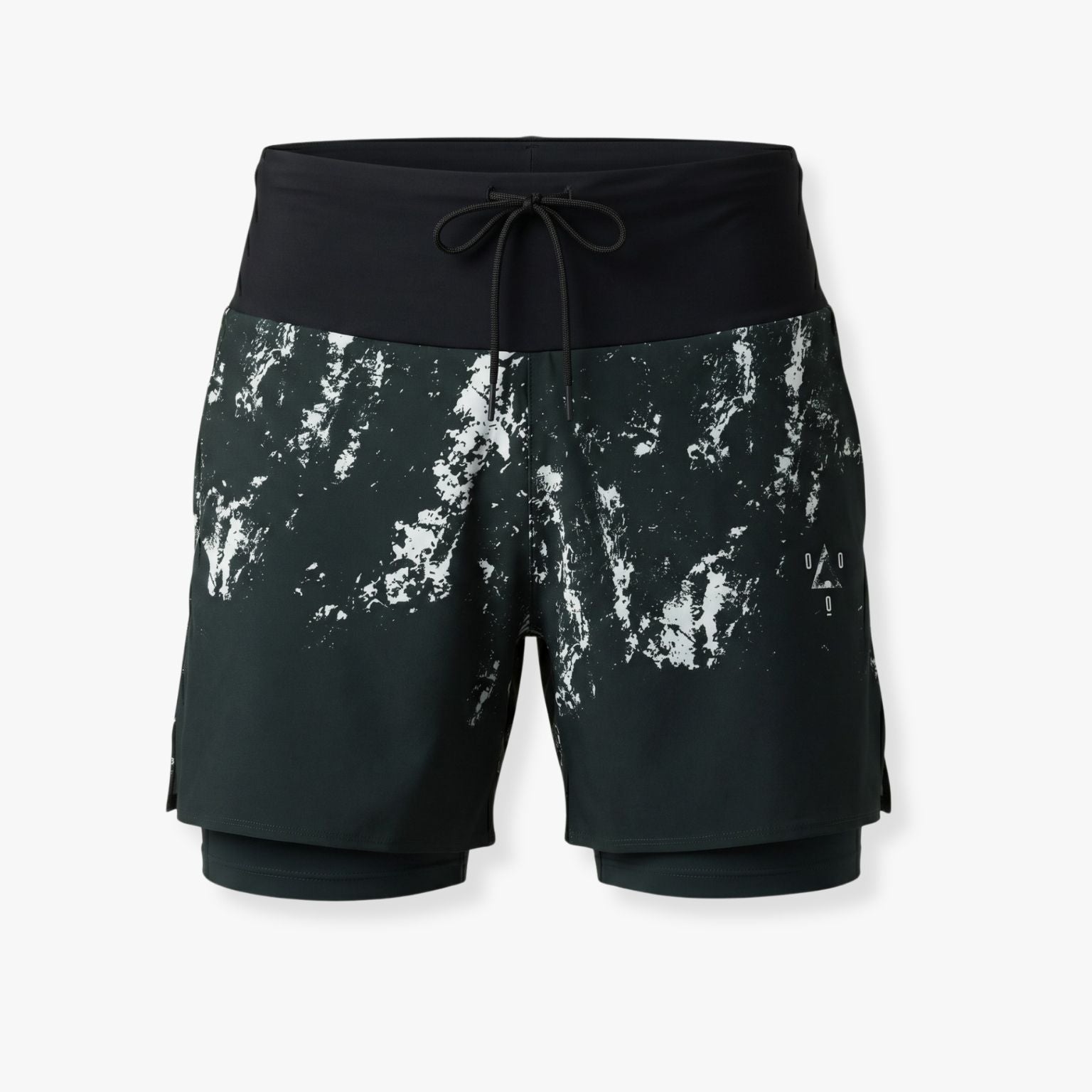
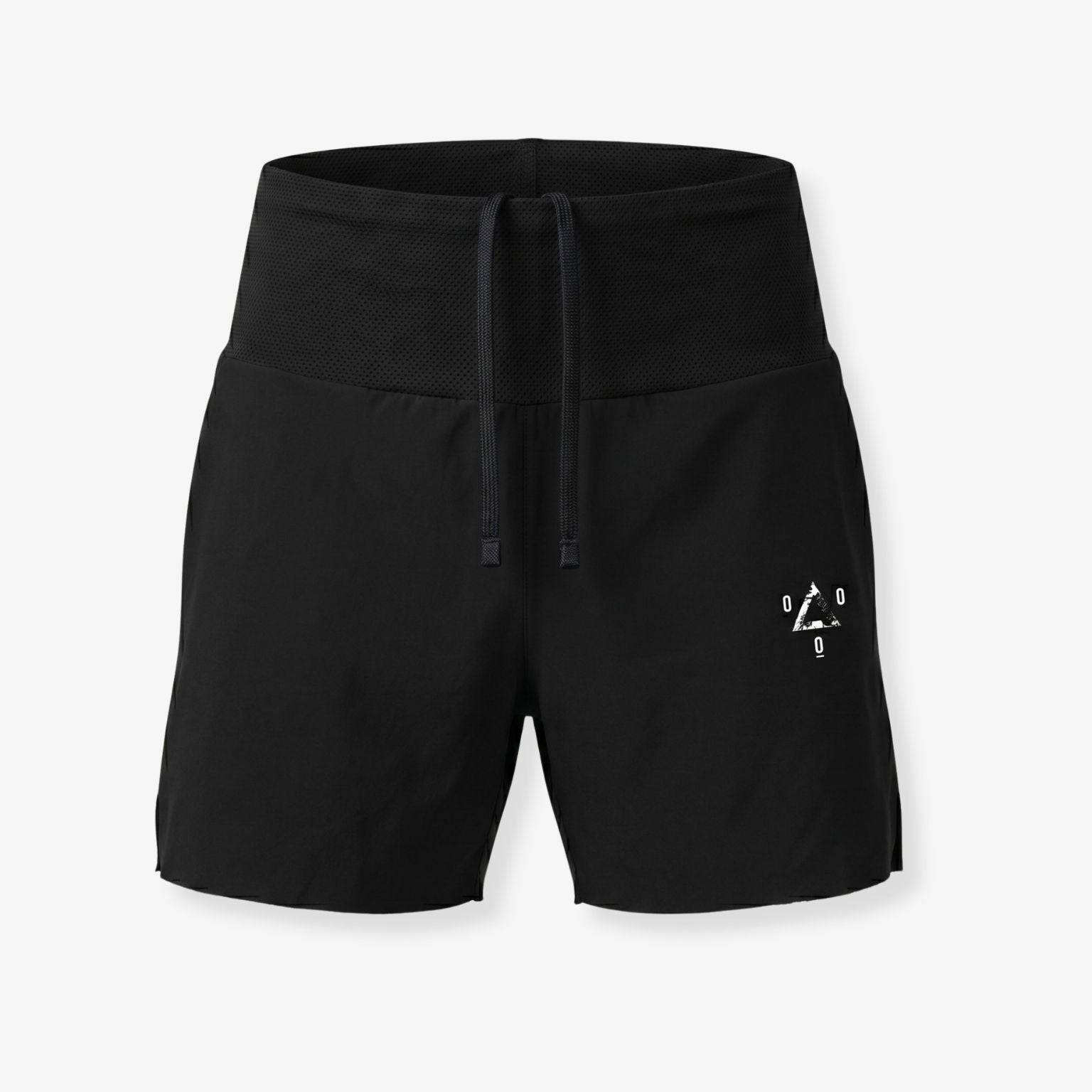
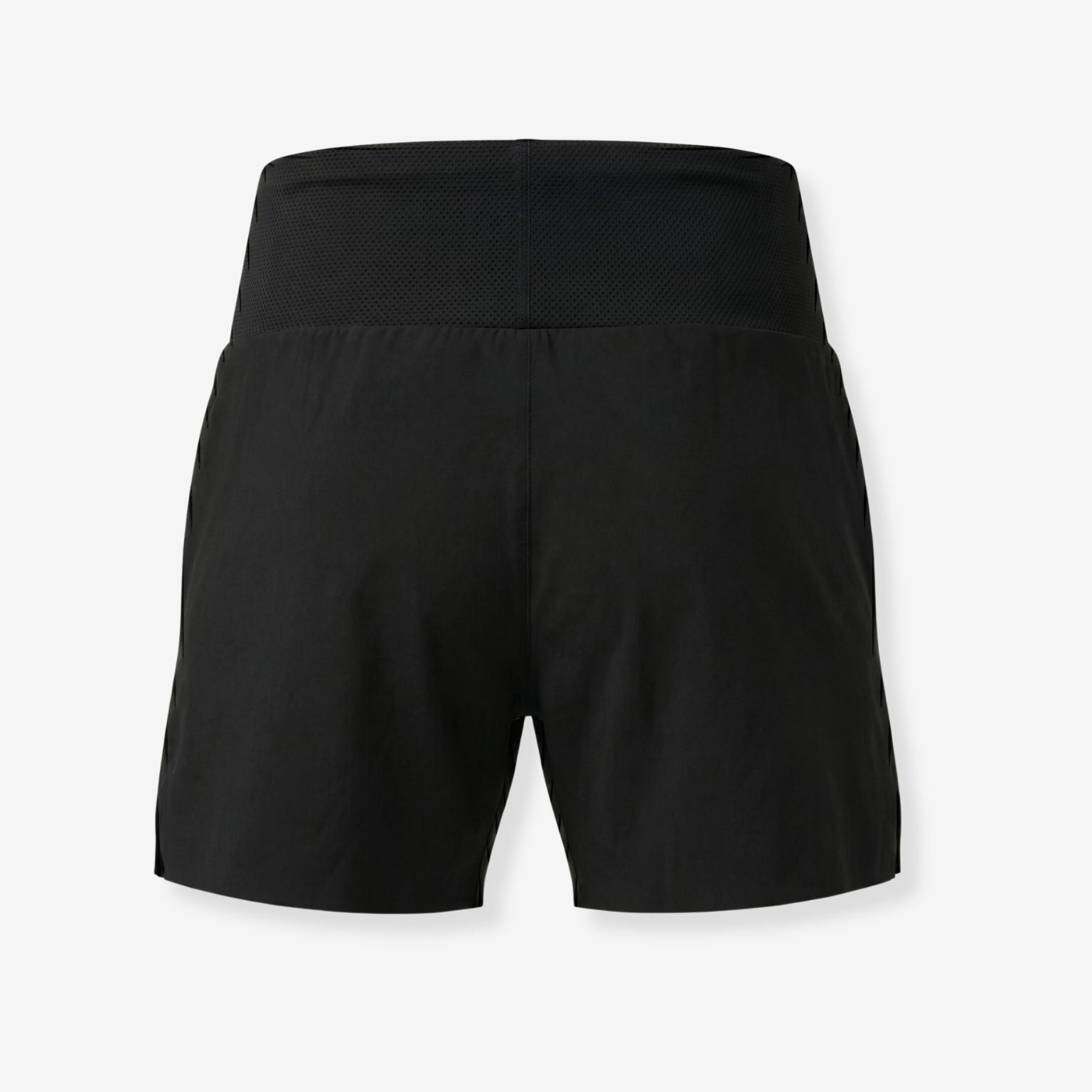
They are exactly the same shorts: same ultralight, quick-drying fabric, same integrated waistband with silicone and drawstring, same mesh pockets, same YKK locking zipper, same pattern. Both made in Portugal with a design created from scratch for us, and in sizes from XXS to 2XL.
The only difference is that the Eclipse, the black one with a white print, has a seamless lycra inner brief. The Alba, the plain black one, does not.
The inner brief is a garment within a garment: it has its own pattern, fabric, manufacturing, and quality control.
So, which one should I choose?
If your average run is an hour or less, if you do a lot of interval training, if you live in a hot area, or if you already run with technical underwear: Alba.
If you do long mountain runs, if you're training for an ultra, if you sweat a lot, or if you've ever come home chafed: Eclipse.
And if you're in doubt, think about the longest run you'll do this year, not the average. The inner brief doesn't bother you on a short run; its absence does bother you on a long one.
You can find both in the running shorts collection and at the Oviedo store, where you can try them on. And if you're starting out in mountain running, you might be interested in what no one tells you before your first trail race.
Frequently Asked Questions
Can I run without anything under the shorts with an inner brief? Yes. The inner brief is designed to be worn directly against the skin. Layering underwear over it negates its function and adds seams where they shouldn't be.
Does the inner brief make you hotter? A little, yes, it's an extra layer. In a lightweight, seamless lycra brief, the difference is small and compensated by drying. In a poor-quality brief, it's very noticeable.
Why do some briefs have elastic on the thigh? To prevent them from riding up. It's a cheap patterning solution: if the brief is well-cut, it's not necessary, and that elastic is precisely what starts to bother you on long runs.
Can the inner brief be removed from the shorts? Not in our models, it's integrated. That's why we make two different models instead of a detachable one, which always ends up being worse in both functions.
What sizes are available? From XXS to 2XL, in both models. The XXS exists because many people asked for it and almost no other brand offers it.



Leave a comment
This site is protected by hCaptcha and the hCaptcha Privacy Policy and Terms of Service apply.