





Why Your Hands Go Numb When Cycling
Hands fall asleep on a bike because the weight of the torso compresses the ulnar nerve against the handlebars, in the area at the base of the palm just below the pinky. It's so common among cyclists that it has its own name in medical literature: cyclist's palsy, or ulnar neuropathy.
It's not a problem of endurance or being undertrained. It's mechanical. And because it's mechanical, it can be changed.
What exactly is happening
The ulnar nerve runs through the arm from the neck to the ring and little fingers. At the wrist, it passes through a narrow channel, Guyon's canal, and at that point, it's practically on the surface, protected by little more than skin and a thin layer of tissue.
When you rest your body weight on your hands, that area gets crushed against the handlebars. If the pressure is pinpoint and sustained for hours, the nerve stops conducting well. First, you feel tingling. Then the sensation fades. In prolonged cases, loss of strength appears when closing the hand, and at that point, it's advisable to see a doctor.
The key lies in two words: pinpoint and sustained. If you can make the pressure distributed or intermittent, the problem is reduced.

The four variables you can adjust
Weight distribution
If you're putting too much weight on your hands, the problem is your position on the bike, not your gloves. A stem that's too long, a saddle that's too far forward, or a back that can't maintain the position due to lack of hip mobility all lead to the same place: your hands. A bike fit resolves this better than any accessory.
Changing support points
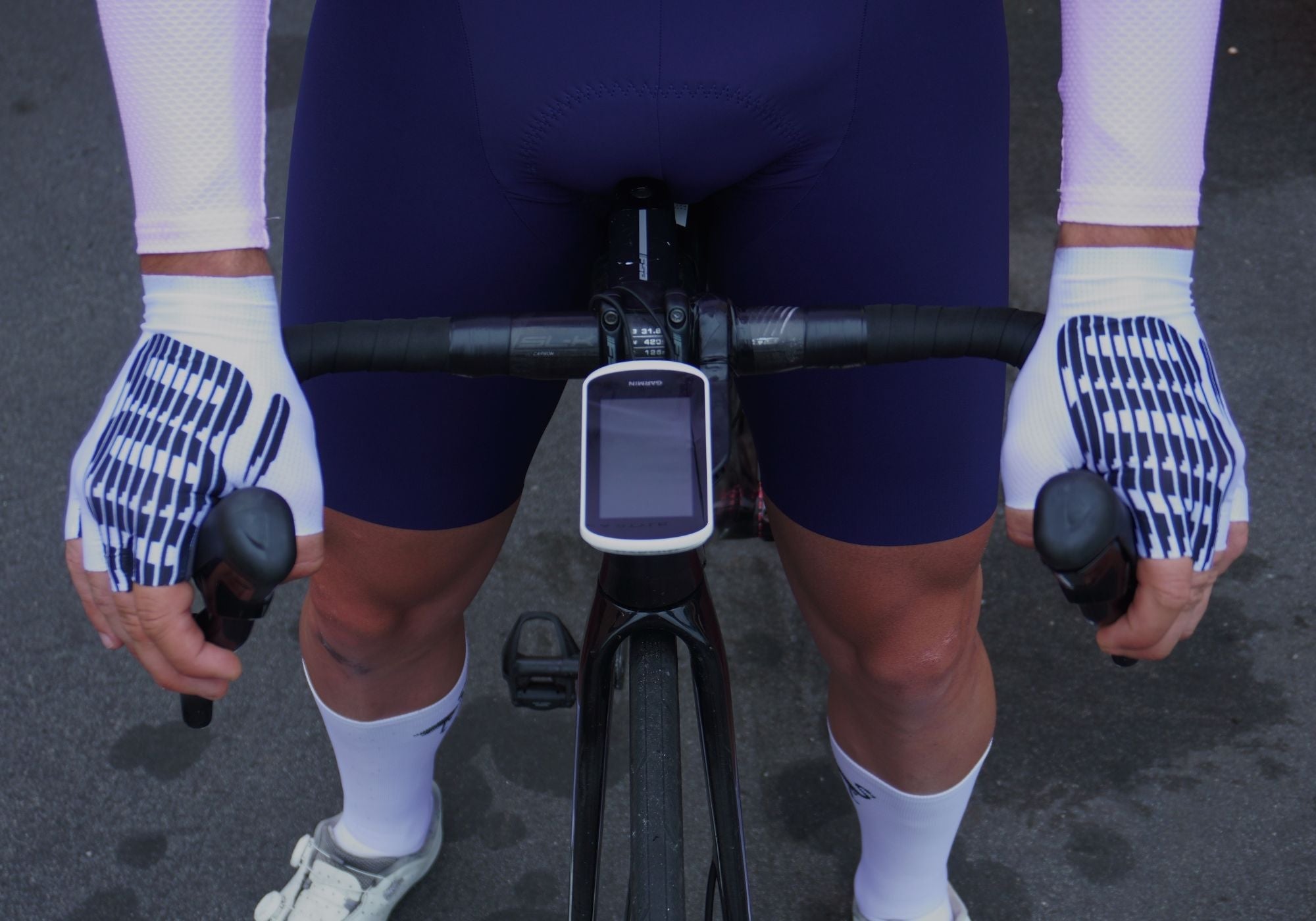
The most common mistake on long rides is riding for three hours with your hands in the same spot. Alternate: top of the handlebars, drops, brake levers. Each position changes the point of contact and gives the nerve a break. Do it before you feel the tingling, not after.
Handlebar width and shape
A handlebar that's too narrow forces you to turn your wrist inward and further constricts Guyon's canal. The flat top part of a gravel handlebar distributes pressure better than a narrow round tube.
The material between your hand and the handlebar
This is where bar tape and gloves come in. And there's a nuance that almost no one explains well: more padding doesn't mean better. Thick, uniform padding distributes pressure poorly and also forces you to grip harder to feel the handlebars, which increases forearm tension. What works is selective padding, placed exactly over the Guyon's canal area and not across the entire palm.
Why the glove palm matters more than it seems
A cycling glove has two jobs. One is obvious: to protect you in a fall. The other is what determines how you finish your ride: managing pressure at a very specific point on your hand.
That's why in the industry, there's a real difference between a glove with generic padding and a glove with a 3D-designed palm, with different thicknesses depending on the area and no seams in the support area. Seams are a minor detail until hour three, at which point they stop being so. It's the same principle that governs a bib short's chamois, applied to the hand.
In our summer cycling gloves, we use an Elastic Interface PalmTech palm, manufactured in Italy by the same company that produces high-end chamois for much of the cycling industry. 3D structure, elasticity, and zero seams in the contact zone. It doesn't work miracles, but it's the variable you can change today without altering your bike's geometry.
When to stop trying things and see a specialist
If tingling appears on short rides, if it takes hours or days to go away after you get off the bike, or if you notice a loss of strength when gripping objects, don't keep trying accessories. That can no longer be resolved with equipment, and it's advisable to see a doctor.
For everything else, the correct order is: first, your position on the bike, then the habit of changing support, and finally the equipment. People usually do it the other way around, buying first, and that's why many end up with new gloves and their hands just as numb.
Frequently Asked Questions
Why do my hands go numb when cycling?
Due to compression of the ulnar nerve against the handlebars, at the base of the palm. The weight of the torso resting on the hands for hours interrupts nerve conduction, first causing tingling and then loss of sensation.
Is it serious if my hands go numb when cycling?
Occasionally, no, and it subsides shortly after getting off the bike. If the tingling takes days to go away or you experience loss of strength when closing your hand, it's advisable to consult a doctor.
Do gloves with more padding solve tingling?
Not necessarily. Thick, uniform padding distributes pressure poorly and forces you to grip harder. Selective padding, located over the Guyon's canal area, with a 3D structure and no seams at the support point, works better.
What is Elastic Interface PalmTech?
It is the palm technology from Elastic Interface, the leading Italian brand for cycling chamois. It applies the same 3D, elastic, seamless structure used in high-end chamois to the glove palm.
What should I check first if my hands go numb?
Your position on the bike, as it's the underlying cause in most cases. Then, the habit of alternating support points during the ride. The glove material and bar tape come last, not first.









Leave a comment
This site is protected by hCaptcha and the hCaptcha Privacy Policy and Terms of Service apply.