






How much sodium do you really need on a long ride
Electrolyte tablets are probably the worst-used product in all of sports nutrition. Not because they don't work, but because almost everyone takes them the same way: one in the bottle, always, regardless of the weather.
The one-size-fits-all dose problem
The amount of sodium you lose through sweat varies greatly from person to person. Typical measurements in athletes range from less than 300 milligrams per liter of sweat to more than 1,800. That is, six times more. And it is a fairly stable characteristic: if you sweat salty, you always sweat salty.
To that is added how much you sweat, which depends on the heat, humidity, intensity, and your own physiology. A cyclist in Asturias in November may lose half a liter per hour. The same cyclist in Murcia in July, two and a half liters.
Multiply the two variables and you will understand why a fixed dose for everyone makes no sense. For some it will be insufficient and for others, too much salt.

How to tell if you sweat salty
You don't need a laboratory test to get a first idea. There are signs that anyone can observe.
If after a long ride you have white salt stains on your jersey or the brim of your cap, you lose a lot of sodium. If your sweat stings your eyes noticeably, the same. If you notice a clearly salty taste when you rub it on your lips, the same. And if you usually get cramps in the second half of long rides despite being well supplied with carbohydrates, that is another clue.
None of those signs is a diagnosis, but together they give you a good idea.
The advantage of being able to adjust
Here is the reason we like effervescent tablets over drinks that already have the electrolytes mixed with the carbohydrates: you can adjust the dose without touching the rest.
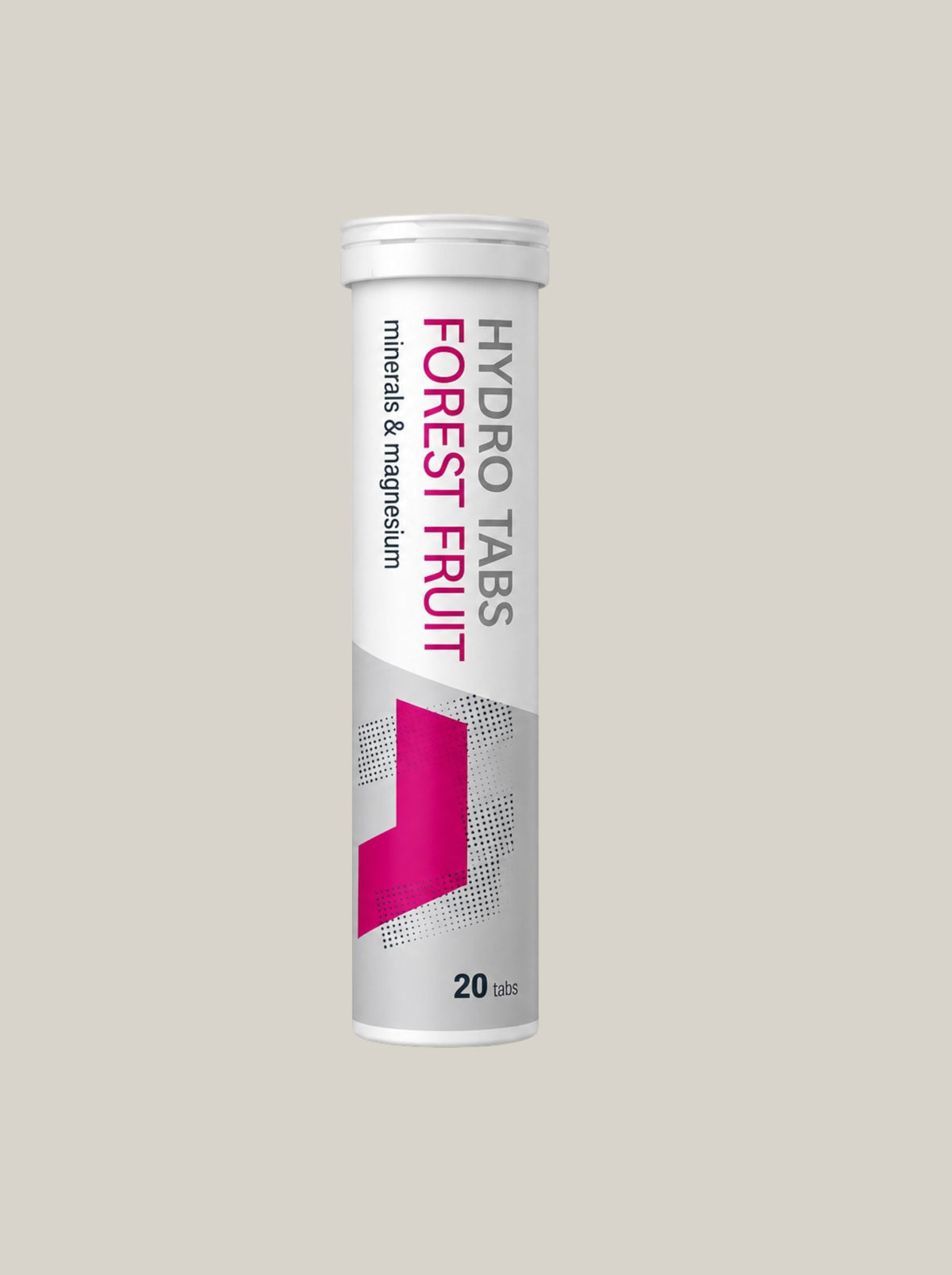
One tablet in the bottle for a normal day. Two or three when the heat or intensity is high. And if that day you need more energy but not more salt, you add carbohydrates separately. They are two independent variables and it is best to be able to treat them as such. Hydro Tabs work exactly like that, with no preset dose and no sugar, so they do not interfere with what you are already taking.

Magnesium and potassium are not fillers
Sodium takes all the spotlight because it is the electrolyte that is lost most in sweat, but it is not the only one that matters.
Magnesium contributes to normal electrolyte balance, normal muscle function, and a reduction in tiredness and fatigue. Potassium works on the other side of the cell membrane, complementing sodium. And vitamin C contributes to the protection of cells against oxidative damage and to a reduction in tiredness and fatigue.
These are statements authorized by European regulations, not brand claims. If an electrolyte product promises more than that, be wary.

Drinking more is not always better
It is worth saying because it goes against intuition: drinking large amounts of water without electrolytes for many hours can dilute the sodium in your blood, and that has serious consequences. It is called hyponatremia and appears especially in long events, in people who drink out of obligation rather than thirst.
The reasonable reference is to drink according to thirst and make sure that what you drink contains sodium when the effort lasts more than a couple of hours. It is not about drinking more, but about drinking better.
In summary
Your sweat rate and your sodium concentration are yours and are not printed on any box. The only thing a product can do is let you adjust, and the only thing you can do is test in training until you find your number.
Sodium, moreover, participates in the transport of glucose, so it goes hand in hand with how many carbohydrates you can absorb per hour.
You have all the options in sports hydration.














Leave a comment
This site is protected by hCaptcha and the hCaptcha Privacy Policy and Terms of Service apply.