







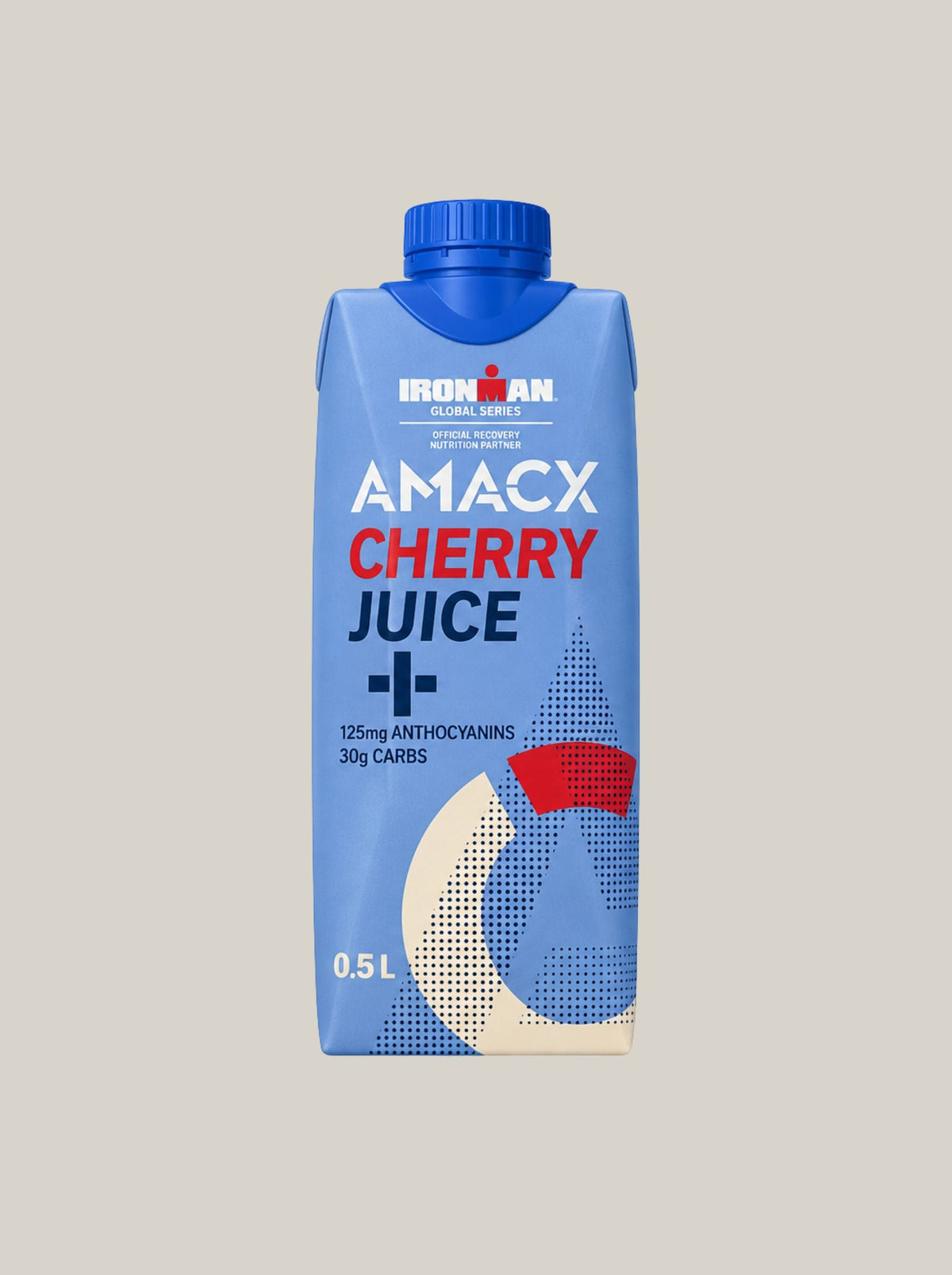
Anthocyanins and tart cherry: what they are and when to take them
Cherry drink has become a post-workout classic, to the point that many people drink it without really knowing why or what sets it apart from supermarket juice.
What are anthocyanins?
Anthocyanins are plant pigments. They belong to the polyphenol family and are responsible for the dark red, purple, and bluish colors of foods such as blueberries, blackcurrants, elderberries, and sour cherries.
They are not vitamins or minerals. The body does not need them to function, which is why there is no recommended daily intake. They are bioactive compounds: substances that interact with the body without being essential nutrients.

Why sour cherry and not regular cherry
This is the first point of confusion. The cherry you eat in June and the sour cherry used in these drinks are not the same fruit.
Sour cherry, also known as tart cherry, is a different species, with a much sharper flavor and a considerably higher concentration of anthocyanins. It is not eaten as a dessert precisely because it is tart, and it is grown mainly for processing.
Sweet cherry juice is not a cheap substitute. It is simply something else.
What really sets a serious product apart
If you compare two cherry drinks, the figure that matters is not the fruit percentage or the word "concentrate": it is how many milligrams of anthocyanins each package contains.
Conventional juice does not declare this, and its content varies with the harvest, variety, ripeness, and processing. It can be high one year and low the next without anyone warning you. A drink formulated with standardized extract guarantees the same amount in every package, which is the only way to know what you are taking.
As a reference, Cherry Juice + declares 125 milligrams of anthocyanins per half-liter package, and adds extracts of blackcurrant and black elderberry, which are also naturally rich in these pigments.

When to take it
The usual time is right after you finish, when you don't feel like preparing anything and the only viable option is to open something and drink it. That is the advantage of a ready-to-drink format.
Half a liter also solves two things at once: hydration and part of your carbohydrate intake, about 30 grams in this case. It does not replace your post-workout meal, but it covers the first hour.
When used in preparation for an important competition, the usual approach is to start several days before and not just on race day, as is the case with other compounds of this type.
The nuance that almost no one mentions
And now the uncomfortable part, which we prefer to tell you.
There is a line of research suggesting that taking antioxidants systematically and continuously after every workout could interfere with some of the adaptations you are seeking with that training. The reasoning is that part of the stimulus that makes you improve comes precisely from the oxidative stress generated by exercise, and always buffering it could also buffer the signal.
This is not a definitive conclusion, nor does it affect all compounds equally, but it does suggest reasonable use: reserve it for competition blocks, high-load weeks, or periods with many consecutive sessions, instead of taking it 365 days a year. During a quiet building phase, it probably isn't providing you with anything.

What we are not going to tell you
Under European regulations, there is no authorized health claim for anthocyanins or sour cherry. That is why we are not going to promise you that you will recover faster or sleep better, even if you have read those phrases elsewhere.
What we can do is tell you what it is, how much it contains, and how people who use it use it. The rest is up to you.
You can see all the options in sports recovery, and if what interests you is the post-workout protein section, we cover it in what format to use at each moment.


























Leave a comment
This site is protected by hCaptcha and the hCaptcha Privacy Policy and Terms of Service apply.