






What to eat before a race: when, how much, and what to avoid
Before a race, it is best to eat a carbohydrate-rich, low-fat, low-fiber meal that you have already tried during training, one to four hours beforehand. Sports nutrition societies recommend 1 to 4 grams of carbohydrates per kilogram of body weight, with more the earlier you eat before the start.
What you eat before a race won't make you faster, but it can make you slower: an ill-timed heavy meal, a high-fiber breakfast, or trying something new on race day are among the most common mistakes at any starting line. Here is what to eat, when, and how much according to the distance, with concrete examples and what the reference guides say.
One note before you start: these are general guidelines for healthy people. If you have any medical conditions, diabetes, intolerances, or a very specific performance goal, it is best to have a sports dietitian-nutritionist tailor them to you.

What the guides say: how much and when
The joint position of the Academy of Nutrition and Dietetics, Dietitians of Canada, and the American College of Sports Medicine on nutrition and athletic performance (Thomas, Erdman and Burke, 2016) summarizes the pre-race meal in a range: 1 to 4 grams of carbohydrates per kilogram of body weight, between 1 and 4 hours before the effort.
The logic is simple. The closer to the start, the smaller the amount and the easier it should be to digest. The more time you have, the more you can eat. For a 70-kilogram person, that means around 70 grams of carbohydrates if they eat one hour before, or up to 280 if they eat four hours before.
Three rules accompany that figure:
- Low fat and low fiber: they slow down digestion and are responsible for many intestinal problems during a race.
- Moderate protein: some protein is fine, but it is not the time for a steak.
- Nothing new on race day: no foods, gels, or drinks that you have not tried during training.
What to eat according to the distance
Short races: 5 and 10 kilometers
In a race lasting less than an hour, your glycogen stores will be sufficient if you have eaten normally in the days before. What matters is arriving neither hungry nor with a full stomach. The same guides indicate that for efforts of 45 minutes or less, there is no need to eat during the race.
If the race is in the morning, have a light breakfast two or three hours before: toast with honey or jam, a banana, and a coffee if you usually drink it. If it is in the afternoon, such as the San Silvestre, eat at your usual time and with your usual meal, without overindulging, and have something light a couple of hours before the start.

Half marathon
Between one and a half and two and a half hours of effort for most. Here, the pre-race meal really matters. It is customary to have breakfast two to four hours before, aiming for the middle or upper end of the carbohydrate range if your stomach tolerates it. And during the race, the guides recommend between 30 and 60 grams of carbohydrates per hour for efforts lasting one to two and a half hours.
Marathon and races lasting more than 90 minutes
For long efforts, carbohydrate loading comes into play: increasing intake in the days before to fill glycogen stores to the maximum. The reference for this same position is 10 to 12 grams of carbohydrates per kilogram per day during the 36 to 48 hours before. It is not about eating more in general, but shifting the diet toward carbohydrates and reducing fat and fiber so that it fits.
On race morning, have breakfast three to four hours before and, if you find it difficult to eat that much, complete it with a carbohydrate drink. As for how to distribute energy during the race, you have the guide on how many gels to take in a marathon according to your time, and if you want to understand why there is a limit to what you can absorb, we explain it in how many grams of carbohydrates per hour you can really absorb.

Examples of meals before a race
Three or four hours before
A full breakfast: white bread or toast with honey or jam, a banana, a yogurt or some fresh cheese, juice, or coffee. Or white rice or pasta with a simple sauce if the race is in the afternoon. This is the time for the main meal.
Two hours before
Something lighter: a piece of toast with honey, a banana, some Maria-style biscuits, or a cereal bar without too much fiber.
One hour before or less
Only things that digest very quickly and in small amounts: half a banana, some gummies, or a few sips of a carbohydrate drink. If you feel your stomach, it is better to have nothing solid.
What to avoid
- Fried foods, cold cuts, and fatty sauces.
- Legumes, large amounts of raw vegetables, whole grains, and nuts just before: too much fiber.
- Heavy meals the night before. The famous "pasta party" is useful if it is a normal, carbohydrate-rich dinner, not a binge.
- Excessive coffee if you are not used to it.
- Any new product, even if it is given to you free in the runner's bag.
And hydration
Arrive well hydrated, but do not drink liters at once in the last hour: you will only succeed in looking for a bathroom at the starting line. Drink normally the day before and take a few sips in the two hours before. If you sweat a lot or the race is long, a drink with electrolytes helps replenish the salt you lose. The Zero Drink from Nduranz, for example, provides electrolytes in an effervescent tablet without adding carbohydrates, for those who want to separate hydration and energy.
Exactly how much salt you need is another story, and it varies greatly from person to person: we break it down in how much sodium you really need on a long run.

What about beet shots?
If you have seen dark red bottles circulating around the warm-up area, they are nitrate shots. They are not part of the pre-race meal, but they share the same time window, so it is best to time them properly.
The usual guideline is to take them between 2.5 and 3 hours before, which is exactly when many runners are having breakfast, because the compound of interest takes that long to reach its peak in the blood. In important races, it is usually accompanied by a loading phase in the days before.
Two practical reminders. First, that a shot provides about 20 grams of carbohydrates, so subtract them from your breakfast count. Second, that it is a product for those who fine-tune details ahead of a specific date, not for just any Sunday. How it works, what the research says, and the mouthwash mistake that ruins the whole process are explained in what is beet nitrate.

If you are going to take something during the race
In races lasting more than an hour, the race strategy starts with the pre-race meal and continues with what you take while running. The important thing is to train it: the intestine also gets used to receiving carbohydrates while you run.
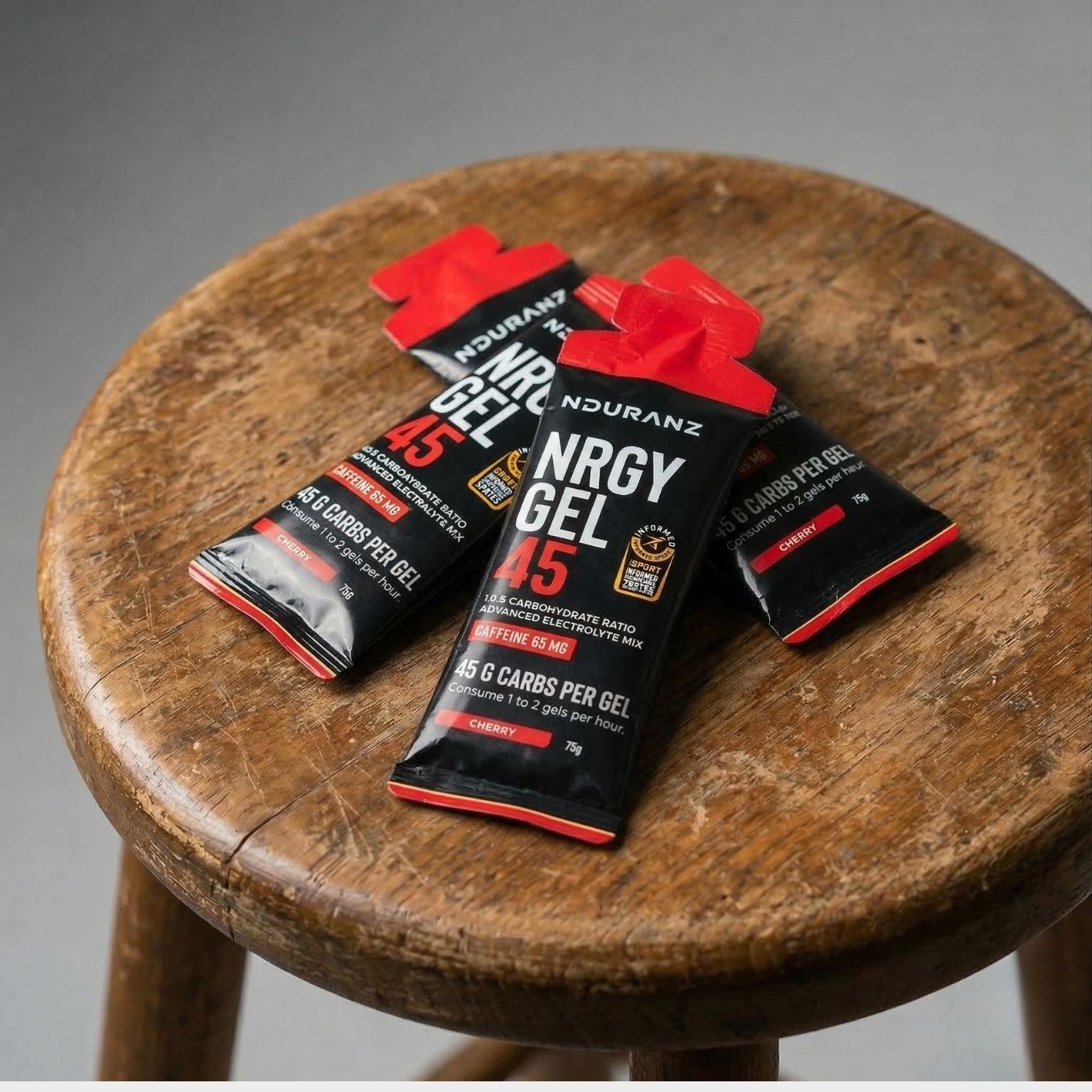
Among what we have in the store is the Nrgy Gel 45, with 45 grams of carbohydrates in a 1:0.8 glucose-fructose ratio and electrolytes, the Nrgy Chew Bar gummy-style bars, or the drinkable gels from Amacx, which already have water incorporated and can be swallowed without a bottle. If you are unsure between formats, we compare them in gel, drink, chew, or bar.
You have everything together in our selection of nutrition for endurance sports.

Frequently asked questions
How long before a race should you eat?
Between one and four hours before. The more time you have, the more you can eat; if there is little time left, it is better to have something small and very digestible, such as half a banana or a piece of toast with honey.
What to have for breakfast before a 10 km race?
A light and carbohydrate-rich breakfast two or three hours before: toast with honey or jam, a banana, and coffee if you usually drink it. In a race lasting less than an hour, you do not need to eat during the race.
Is it good to eat pasta the night before a race?
Yes, if it is a normal dinner rich in carbohydrates and low in fat. In races lasting more than 90 minutes, carbohydrate loading is done during the two days before, not just at the last dinner.
When do you take a beet shot?
Between 2.5 and 3 hours before the effort, because nitrate needs that time to reach its peak in the blood. Ahead of an important race, it is also usually taken during the days before. Remember that it provides carbohydrates and counts toward your breakfast.
Can you run a race on an empty stomach?
In a short race, it is possible if you are used to it, but it is not recommended for performance. In races lasting more than an hour, starting without eating increases the risk of running out of energy before the finish line.
What should not be eaten before running?
Fatty, fried, or very high-fiber foods, such as legumes, whole grains, or large amounts of nuts, because they digest slowly and can cause intestinal discomfort. And nothing you have not tried before during training.
If you want to organize your nutrition strategy for the next race, the store in Oviedo will help you choose what to take according to the distance.

















Leave a comment
This site is protected by hCaptcha and the hCaptcha Privacy Policy and Terms of Service apply.