





La Cubilla Pass by Bike: The Asturian Galibier
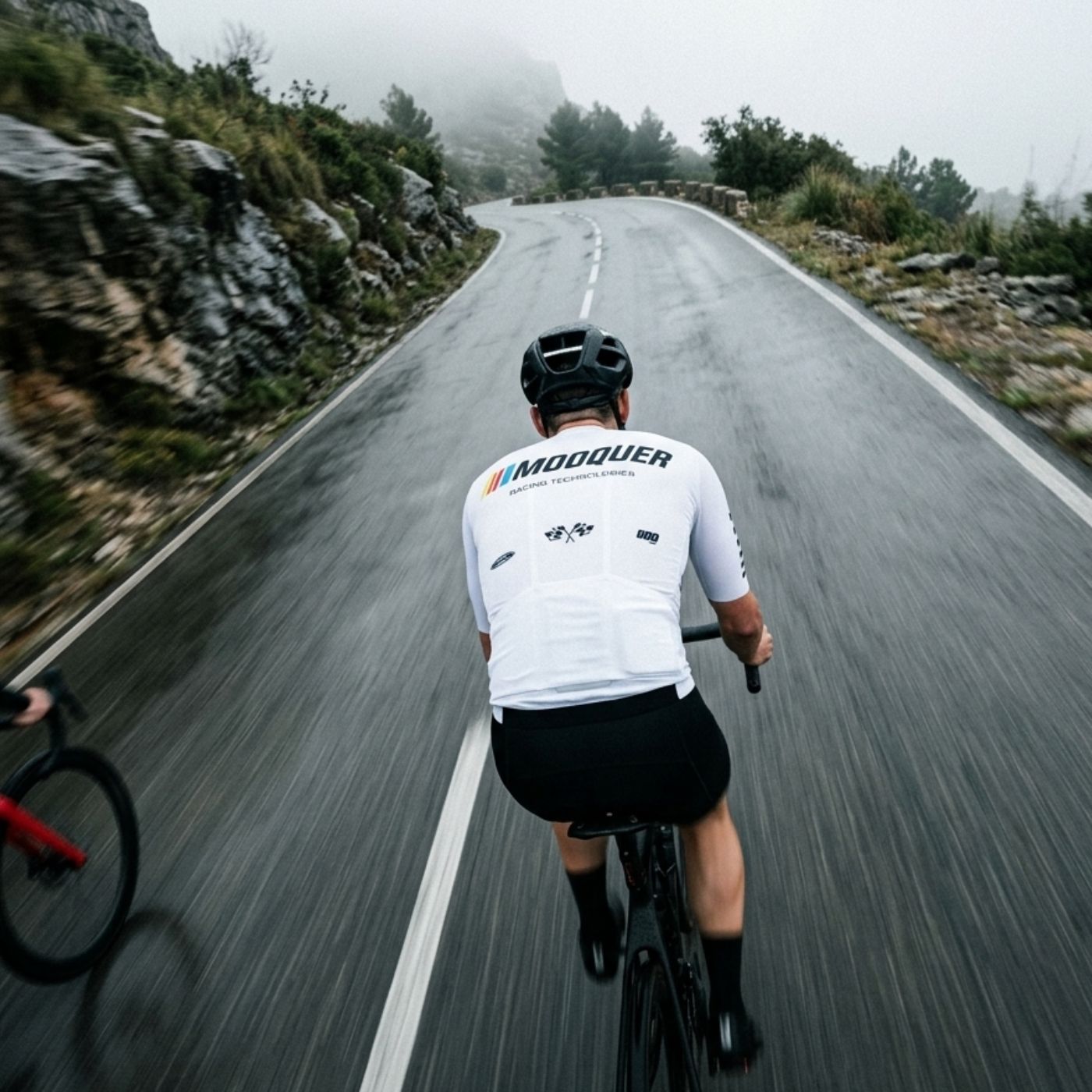
There is a pass in Asturias that seems to belong somewhere else. It has no twenty-percent ramps, single-track roads, or dense forest. It has a wide, well-paved road that climbs for almost thirty kilometers through an open high-mountain landscape.
That is why they call it the Asturian Galibier, and for once the nickname is not marketing.
The numbers
From Campomanes, in Lena, it is 17.8 kilometers with 1,120 meters of elevation gain, an average gradient of 6.3% and a maximum of 12%. The summit is at 1,683 meters.
But the figure that defines the pass is not that. It is that the real climb is almost thirty continuous kilometers if you count the approach from Campomanes. A long half-hour on a road that climbs without you realizing it before the pass itself begins.
On our difficulty scale, it scores 71.

The profile, kilometer by kilometer
| Km | 1 | 2 | 3 | 4 | 5 | 6 | 7 | 8 | 9 | 10 | 11 | 12 | 13 | 14 | 15 | 16 | 17 | 18 |
|---|---|---|---|---|---|---|---|---|---|---|---|---|---|---|---|---|---|---|
| % | 3 | 4 | 5 | 6 | 7 | 6 | 5 | 7 | 8 | 6 | 7 | 8 | 7 | 6 | 8 | 7 | 5 | 6 |
Look how flat that profile is. Between five and eight, kilometer after kilometer, eighteen times. Not a single double-digit ramp.
And yet it is a serious pass, because there is not a single kilometer of respite either. You cannot recover anywhere. It is an hour and a half of the same gradient, which sounds comfortable and ends up being a mental exercise.
Compared to the Gamoniteiru, which crushes you with seven kilometers at thirteen, La Cubilla wears you down with eighteen at seven. The result in the legs the next day is not that different.
How long it will take you
| Cycle tourist | 1h58 |
| Fit enthusiast | 1h30 |
| Competition pace | 1h00 |
The pass of La Vuelta
La Cubilla debuted in La Vuelta a España in 2019, with a victory by Jakob Fuglsang. It is, along with the Gamoniteiru, one of the recent discoveries of Asturian cycling.
What doesn't show up in the data
The road is wide and well-paved, which is almost a rarity in Asturias. That completely changes the experience: you can ride in a group, two by two, talking, instead of single file on a narrow lane.
There are cattle grids and free-roaming livestock. It is a high-altitude pasture area. Cattle grids are those metal grates in the ground that prevent cows from passing: cross them perpendicularly and without braking, especially if they are wet.
There are no services at the summit. Nothing. Stock up in Campomanes.

The landscape changes completely from the halfway point. You leave the forest and emerge into an open high-mountain landscape that resembles no other pass in the guide. It is the one that generates the most photos, and not because of the effort.
The combo. La Cubilla with the Alto de Pajares via the old road. They are the two greats of the Lena Valley and they link up naturally from Campomanes.
Who it is for
For those who enjoy climbing, not for those who enjoy suffering. If your thing is a long pass at a steady pace, looking at the landscape and pacing yourself, this is your pass in Asturias and probably the best of them all.
If you have come looking for a wall, go to the Angliru.
The other nine. La Cubilla is one of the ten mythical passes of Asturias that we have collected in a seventeen-page guide: kilometer-by-kilometer profiles, times by level, and six routes that link them together. It is free.
Download the guide to the passes of Asturias
Frequently asked questions
How long is the Puerto de La Cubilla?
17.8 kilometers from Campomanes, with 1,120 meters of elevation gain, an average gradient of 6.3% and a maximum of 12%. The summit is at 1,683 meters. Counting the approach, the continuous climb is close to 30 kilometers.
Why is it called the Asturian Galibier?
Because of its length, the regularity of the gradient, the wide road, and the open high-mountain landscape of the final stretch, which is more reminiscent of Alpine passes than the rest of the Asturian climbs.
Is it a hard pass?
It is demanding because of its length, not its gradient. It has no kilometer with an average above 8%, but it also has none that offer respite. On our difficulty scale, it scores 71, compared to Angliru's 128.
Is there water or services at the top?
There is nothing at the summit. It is best to stock up in Campomanes before starting.










Leave a comment
This site is protected by hCaptcha and the hCaptcha Privacy Policy and Terms of Service apply.