






Article: Which Carbon Wheel Profile to Choose: 35, 45, 65, or 85 mm
Which Carbon Wheel Profile to Choose: 35, 45, 65, or 85 mm
The conversation always starts the same way. Someone comes in, or writes, and says they want carbon wheels. And the first thing we ask isn't about their budget. It's about where they ride.
Because almost no one chooses the wrong brand. But almost everyone chooses the wrong rim depth.
There is a deeply held belief that more depth makes for a better wheel, and that a deep-section rim is just the expensive version of the same thing. It is not. Rim depth is a compromise, and choosing the highest profile you can afford is exactly as mistaken as choosing the lowest.

What rim depth does, in one sentence
A deep rim closes the gap between the tire and the hub, turning the assembly into a more continuous surface and allowing the air to flow around it with less turbulence. That reduces drag. And it does so at a particularly sensitive point, because the wheel doesn't just move forward: it rotates, so the top part moves through the air at twice your speed.
In exchange, that large, vertical surface does two things you don't want. It weighs more, and most of that weight is far from the center, which is where it is hardest to accelerate. And it gives crosswinds a sail to push against.
Everything else is just nuance regarding those two facts.
Where you ride, which is the real question
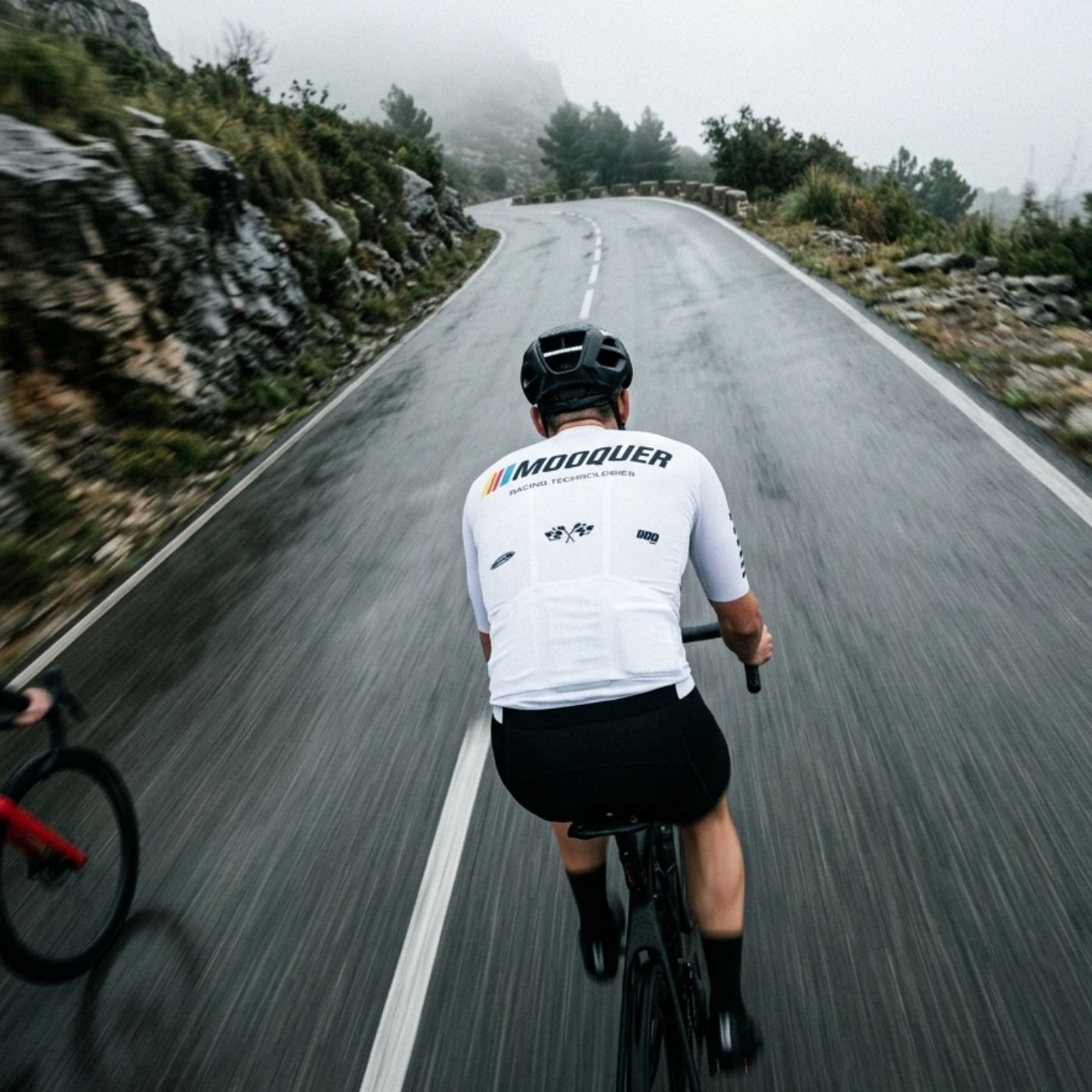
If your terrain has real climbs, the kind that take twenty minutes to get up, a low or medium profile is the answer. Between 30 and 40 millimeters. At climbing speeds, aerodynamics contribute little, but you notice every gram on the periphery of the wheel every time you exit a tight turn or change your pace. Here, a deep profile is dead weight hanging in the most expensive place.

- If you ride on punchy, rolling terrain—short climbs, false flats, constant changes of pace—the 45 to 50mm range is what most people should be buying, and what they buy the least. It’s tall enough for aerodynamics to count when you're riding on the flat at 35 km/h, and contained enough not to penalize you on climbs or make you nervous on a windy descent. If you’re only going to have one wheelset for everything, this is what you want.
- If your area is flat and you ride fast in a group, go for 50 to 65mm. This is where you actually get your money's worth from the rim depth, because you spend hours at the speed where aerodynamics dominate everything else. It is also the range where the shape of the rim, not just its height, truly begins to matter.
- Anything over 80mm is for time trials and triathlons. And often not even then: a rear disc wheel with a high-profile front wheel is usually a better combination than two extremely deep wheels, because the front wheel is the one that steers you and takes the brunt of the wind.
Crosswinds, which is where the decision is made
This is the part that people discover late, and the hard way.
When the wind doesn't come from the front but from the side, the rim stops being just an object passing through the air and becomes an airfoil. It generates side force. And if the airflow detaches from the leeward side abruptly, that force appears and disappears suddenly, which feels like your bike being jerked around.
Modern, wide, rounded-edge rims manage this much better than those from ten years ago. A wide rim with a blunt edge keeps the airflow attached even at much wider wind angles, and when it does detach, it does so progressively. That is why a modern 50mm wheel can be more manageable in the wind than an old 40mm one, and why comparing wheels only by millimeters is a mistake.
Even so, there is a physical limit. If you live on the coast, on a windy plateau, or spend the winter riding in crosswinds, drop one profile size from what your terrain would otherwise dictate. A wheel you don't trust on a descent doesn't make you faster: it makes you brake sooner.
And if you are a lighter rider, this affects you more. Not because the wheel generates more force, but because that same force moves a sixty-kilo cyclist more than it does a ninety-kilo one.
Weight, and why it matters less than you think
A lightweight wheelset feels incredible. This is true and should not be discounted, because the feeling of a responsive bike is part of why we ride.
What isn't true is the magnitude of the difference. On a long, steady climb, the difference between a 1,350-gram set and a 1,550-gram set is measured in seconds, not minutes. On the flat, once you're up to speed, it’s practically zero: what slows you down is the air, not the mass.
Where you do notice it is in repeated acceleration. A criterium, a group ride that attacks every hill, gravel with constant changes of pace. There, you are accelerating that mass hundreds of times, and the total begins to add up.
So the question isn't how much the wheel weighs. It’s how many times a day you accelerate it.

The rim and tire are chosen together, not separately
This is almost always ignored, and it's where a good portion of what you've paid for is thrown in the trash.
An aerodynamic rim is designed to work with a tire of a specific width. The rule used in the industry is that the rim should be at least five percent wider than the tire once mounted and inflated, which almost never matches the width printed on the sidewall. If the tire protrudes from the rim, the air hits a step, and all the work put into the shape is lost.
With current internal widths of 21 to 23 millimeters, that means tires from 28 to 32mm. If you've bought a wheel designed for 30mm tires and you mount a 25mm tire because you've always ridden 25mm, you've bought a completely different wheel.
And the tire isn't just aerodynamics: it's the majority of your rolling resistance and practically all of your comfort. A good tire on a decent wheel performs better than a mediocre tire on an excellent wheel.
Hubs, spokes, and the things you don't see
A good hub doesn't make you measurably faster. It ensures you have a wheel that is still the same wheel after three winters.
The difference between a standard quality bearing and a high-end ceramic one exists, it is measured, and it is less than one watt. It is worth it if you have already optimized everything else and are chasing the final details. It is not worth it as a first step, and it is certainly not worth it if the budget comes at the cost of dropping down a rim profile tier.
Spoking matters more than it seems. The number of spokes, how they are laced, and their tension determine lateral stiffness, which is what you notice when you stand up out of the saddle and the rim doesn't rub against the brake pad. A light, soft wheel is worse than a slightly heavier, stiffer one, and you notice that on the very first ride.
The summary, if you’ve made it this far looking for a number
One set for everything, mixed terrain, no extreme wind: 45 millimeters. It is the correct answer for most people who ask us, and it is the one that is the least exciting.
Real mountains and little flat riding: 35 to 40mm.
Flat terrain, fast group rides, sportives: 50 to 65mm.
Time trial and triathlon: whatever you can handle in the front, disc wheel in the back.
And constant wind: drop one size from what you were originally considering.
Before you buy, three questions
How many times a year will you use them in the situation that justifies the profile you're looking at? If the answer is two races, maybe the money is better spent elsewhere.
What happens if you break them? Carbon wheels do break, and what differentiates one manufacturer from another is not that they promise it won't happen, but what they do when it does. We explain it in full here, including exactly what a crash replacement is and what it does not cover.

And who are you going to talk to when you have a problem? Buying two thousand euros worth of wheels via a form with no one behind it is cheap until the day it stops being so.
We are an official Scope distributor and we have them in Oviedo. If you’re weighing up a profile, write to us with where you ride, how much you weigh, and what bike you have, and we’ll tell you what we would do. Even if that means not buying anything yet.
See Scope road wheels · See Scope gravel wheels
Frequently Asked Questions
- Which wheel profile is best for everything?
Between 45 and 50 millimeters. It’s the compromise that works on mixed terrain: it provides aerodynamic gains on the flat at speeds of 33 or 35 km/h and up, and it doesn't penalize you appreciably when climbing or in moderate crosswinds.
- Is a high profile dangerous in the wind?
Uncomfortable rather than dangerous, and it depends above all on the shape of the rim, not just its height. A modern, wide, rounded-edge rim handles much higher wind angles than a narrow, old one of the same profile. Even so, if you regularly ride in crosswinds, drop one profile size.
- How much does wheel weight matter?
Less than people think on steady climbs, where two hundred grams equals seconds. More than people think in repeated acceleration, because the weight is on the periphery. The useful question is not how much they weigh, but how many times a day you accelerate them.
- What tire should I mount on a deep-section wheel?
One that, when measured after being mounted and inflated, is at least five percent narrower than the rim. With internal widths of 21 to 23 millimeters, that usually means 28 to 32mm tires. If the tire protrudes from the rim, you lose the aerodynamic advantage you paid for.







Leave a comment
This site is protected by hCaptcha and the hCaptcha Privacy Policy and Terms of Service apply.