








Why an Ankle Reflector Makes You More Visible Than a Vest
A driver riding at night detects you by the movement of your ankles before by a reflective surface on your chest. It is not intuition: it has been measured, and the difference is significant.
What is biomotion
The human brain is specialized in recognizing the movement of another human being. A few points of light located at the joints, moving as a person moves, are enough for it to identify that someone is there. It is such a basic mechanism that it works before the image is clear. It is called biological movement, or biomotion.
A static reflective surface, such as the band of a vest, does not activate that mechanism. It is a patch of light. It can be very bright, but the driver takes longer to interpret what it is, and in the meantime, they keep going.
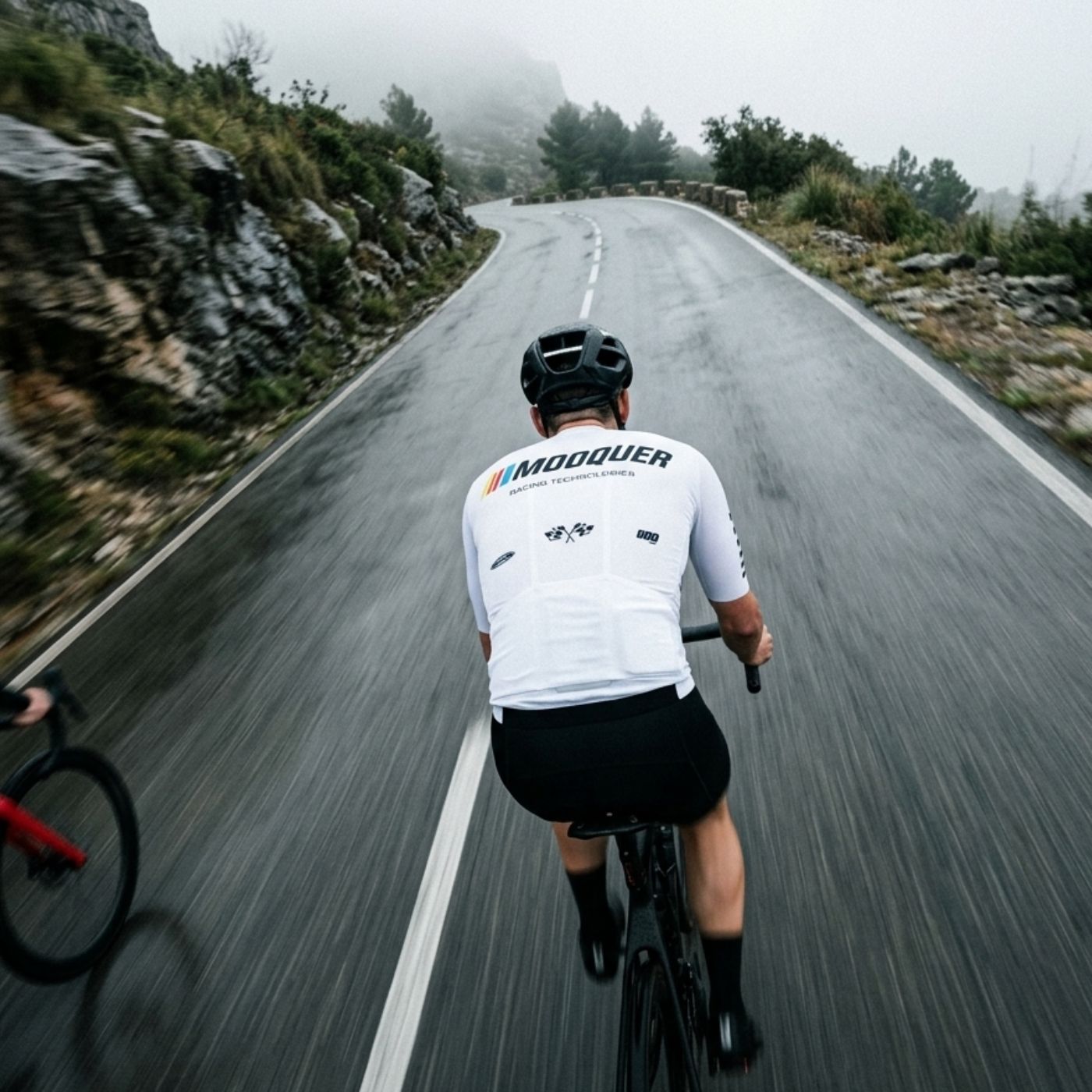
A cyclist's ankles, on the other hand, describe a continuous circle at eighty or ninety revolutions per minute. It is the most recognizable human movement pattern on a road.

The numbers
The research group at the Queensland University of Technology has been measuring this for years with real cyclists on a closed circuit and drivers behind the wheel. These are their main results:
- Placing retroreflective material on the ankles and knees multiplied by six the distance at which drivers detected the cyclist, compared to wearing nothing.
- Compared to a reflective vest with the same amount of material, placement on the joints tripled the recognition distance.
- In another study, drivers reacted to the cyclist in 70% of the laps: from 27% with black clothing and no lights to 100% with a vest plus ankles and knees.
And the most uncomfortable piece of data in the set: the cyclists themselves overestimate how visible they are and underestimate the benefit of wearing reflective material on their ankles and knees. In other words, most people believe they are seen much better than they actually are.

The fluorescent vest does not do what you think
It is useful to separate two things that are always confused. Fluorescent material, the bright yellow, works during the day because it takes advantage of ultraviolet light. At night it does nothing: without ultraviolet light it does not fluoresce.
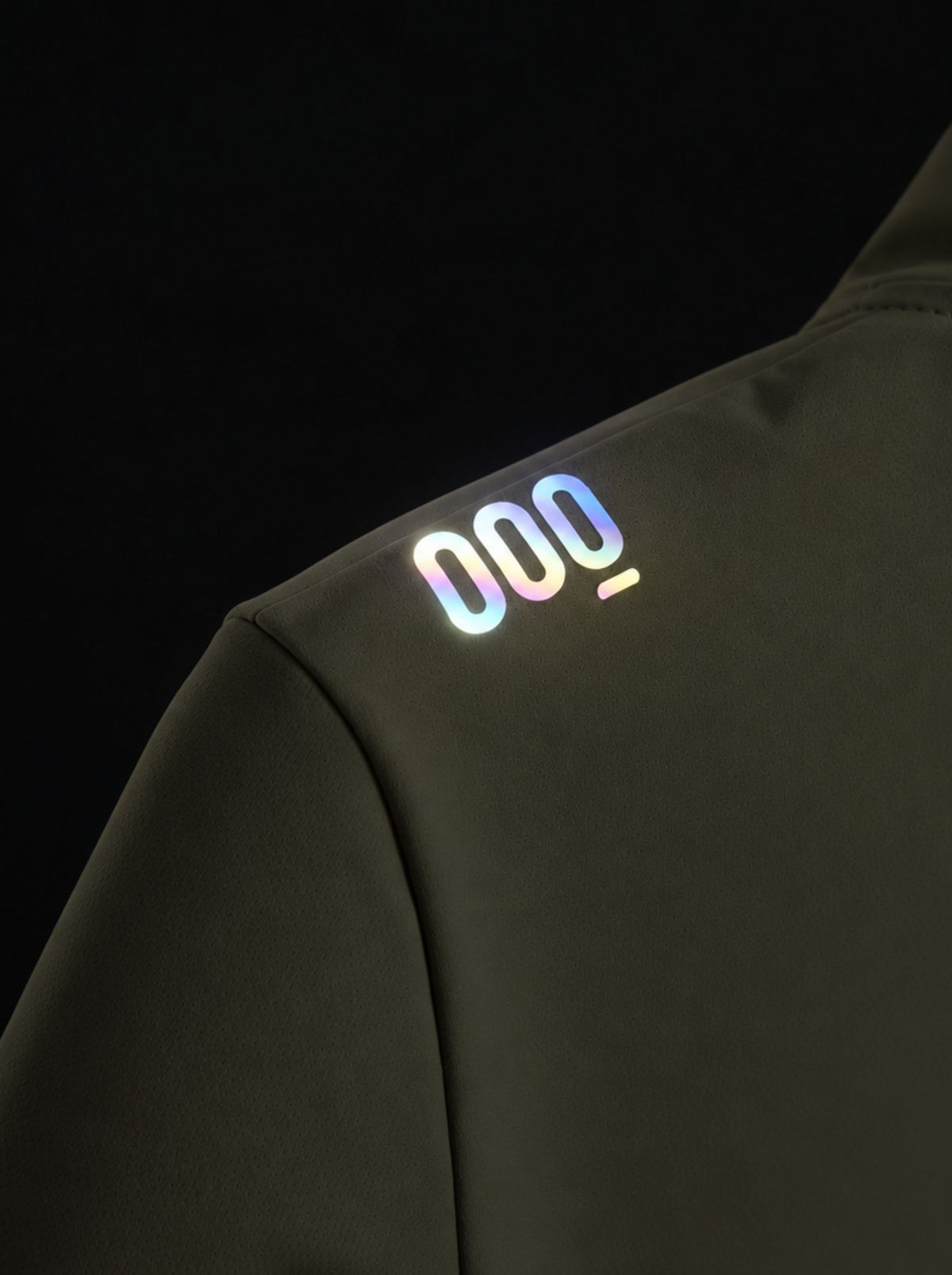
Retroreflective material is what returns the light from headlights to its source, and it is what works at night. They are different technologies that solve different times of the day.
A study with daylight also found that yellow vests alone did not improve the distance at which drivers detected the cyclist. The vest reassures more than it solves.

What the law says in Spain
The obligation exists and many people do not know it. When a cyclist rides on an interurban road and the use of lights is mandatory, they must also wear a reflective garment or element that allows other drivers to distinguish them from a distance. It is included in the Traffic Law and the General Traffic Regulations.
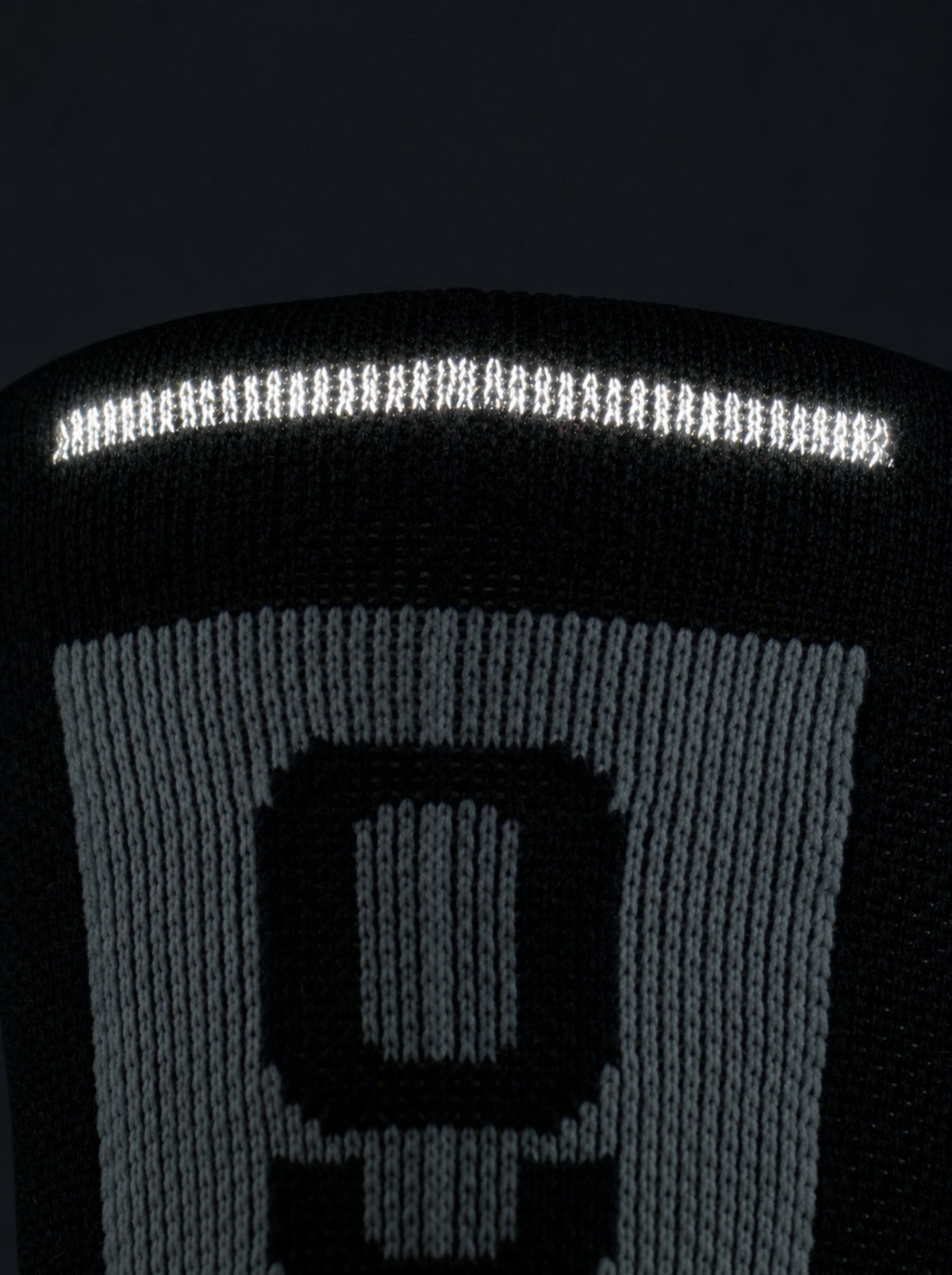
The rule does not require a specific vest: it requires a reflective element. A sock with a retroreflective band, a jacket with reflective details, or a wristband fulfill the function as long as they are visible. And lights, white in front and red in back, are mandatory at night both inside and outside towns.
Beyond the fine, there is a consequence that almost no one has in mind: in a hit-and-run, riding without the mandatory elements can influence how responsibility is apportioned.
What to do in practice
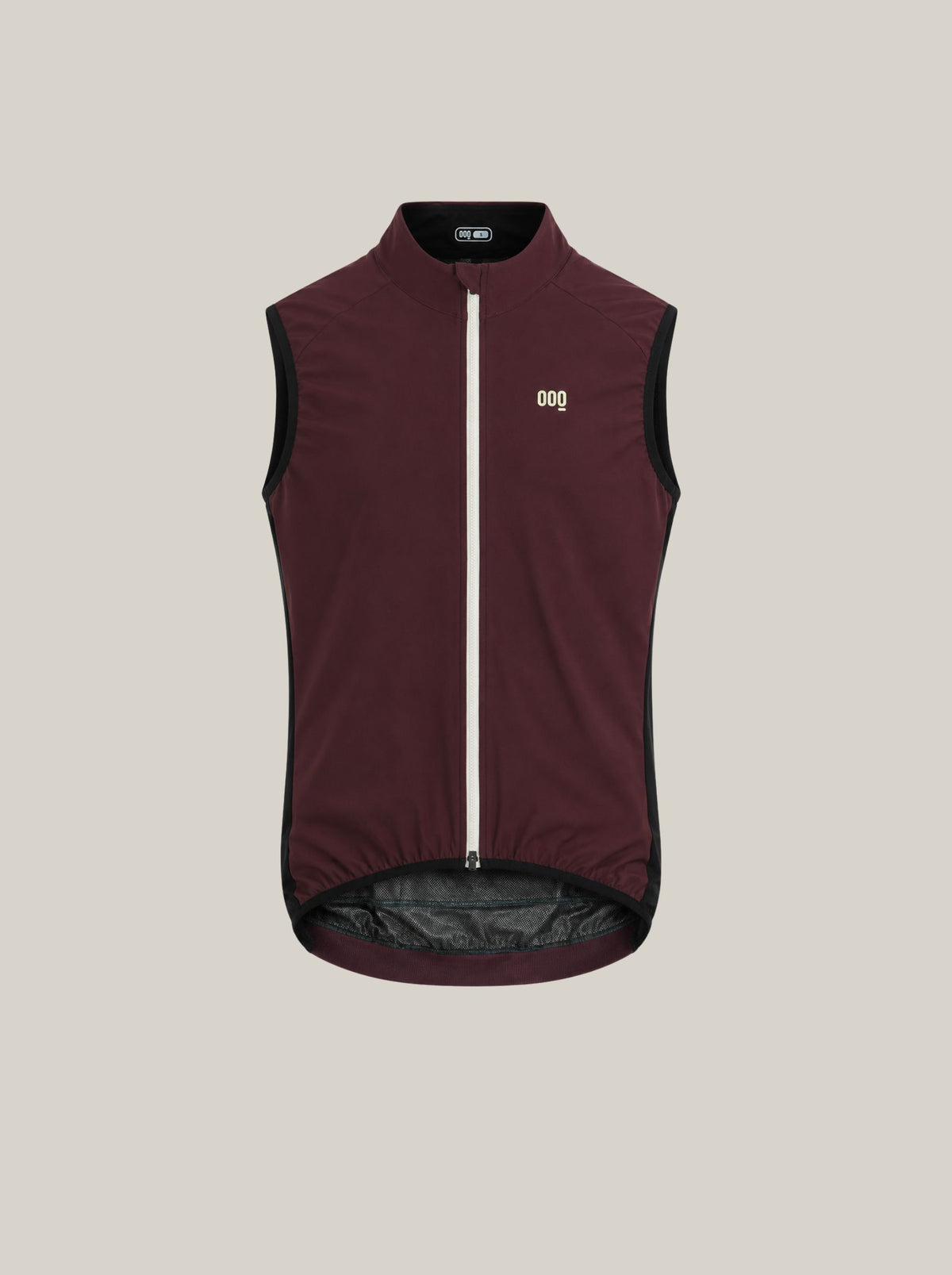
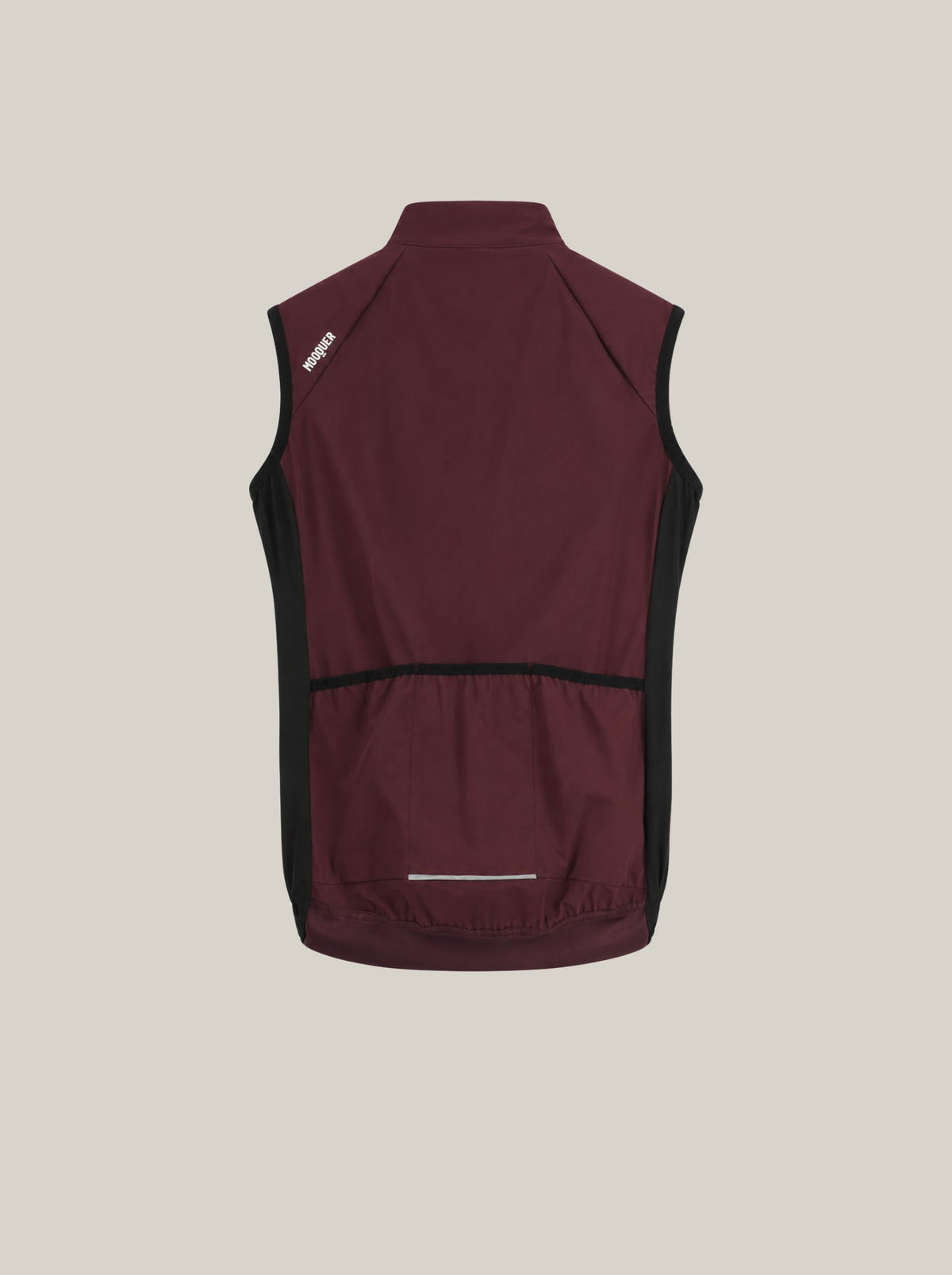
Lights always, front and back, also during the day if the road is narrow or the day is gray. Reflective material on the moving parts: ankles and knees before the torso. And if you are going to wear a vest, wear it in addition, not instead.
The good thing is that reflective material on the ankle does not force you to give up anything. It does not change how you dress nor does it force you to put on a garment that is superfluous as soon as the temperature rises.
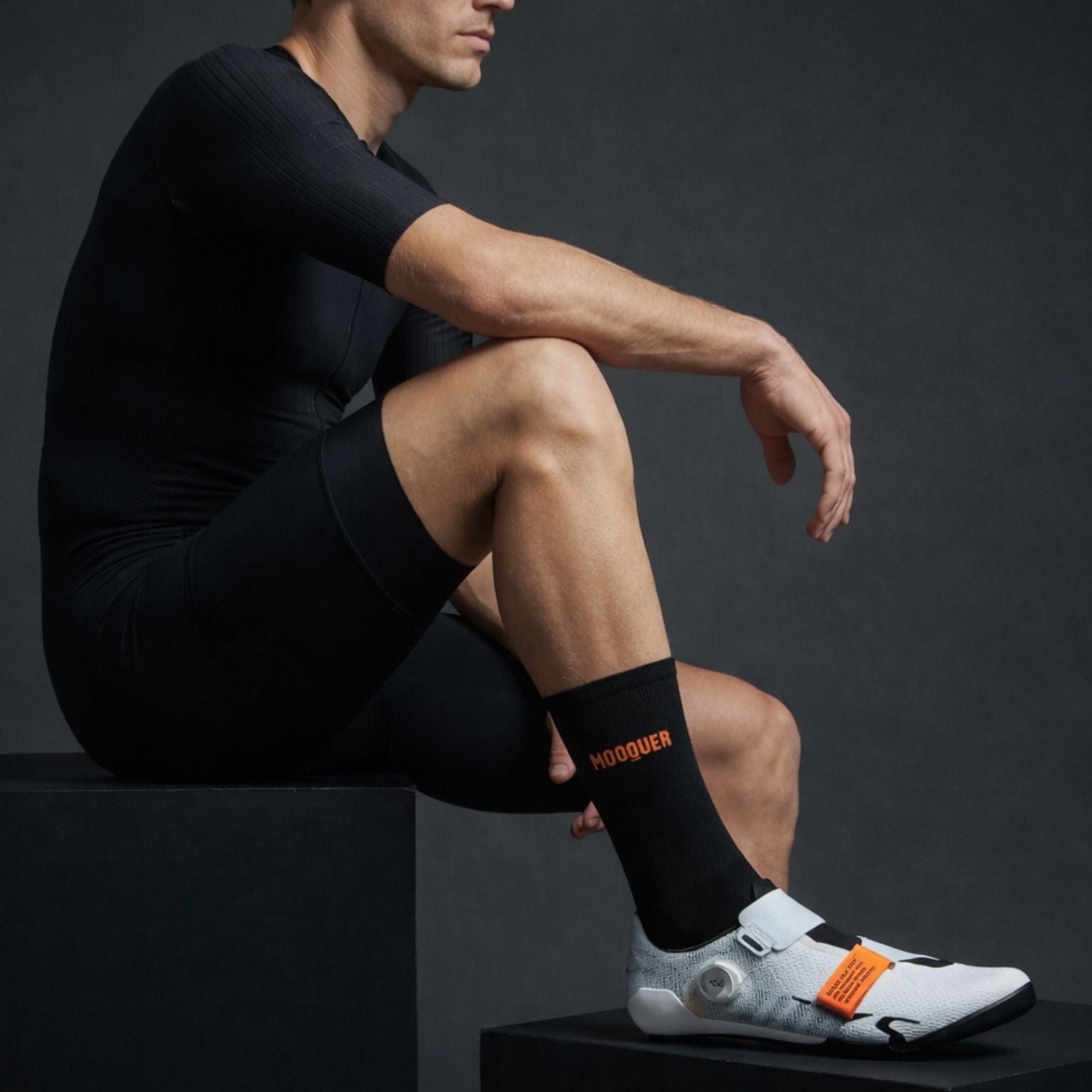
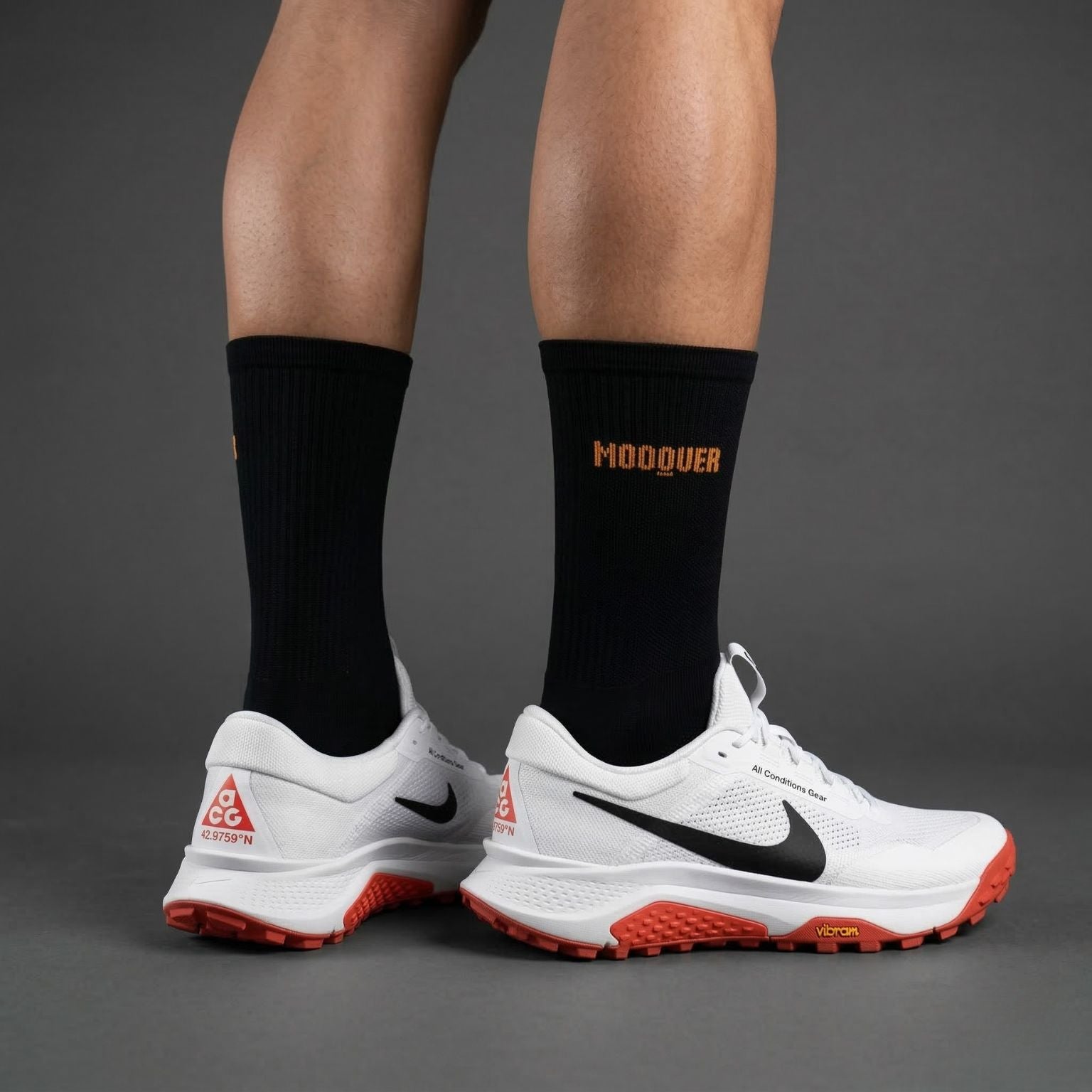
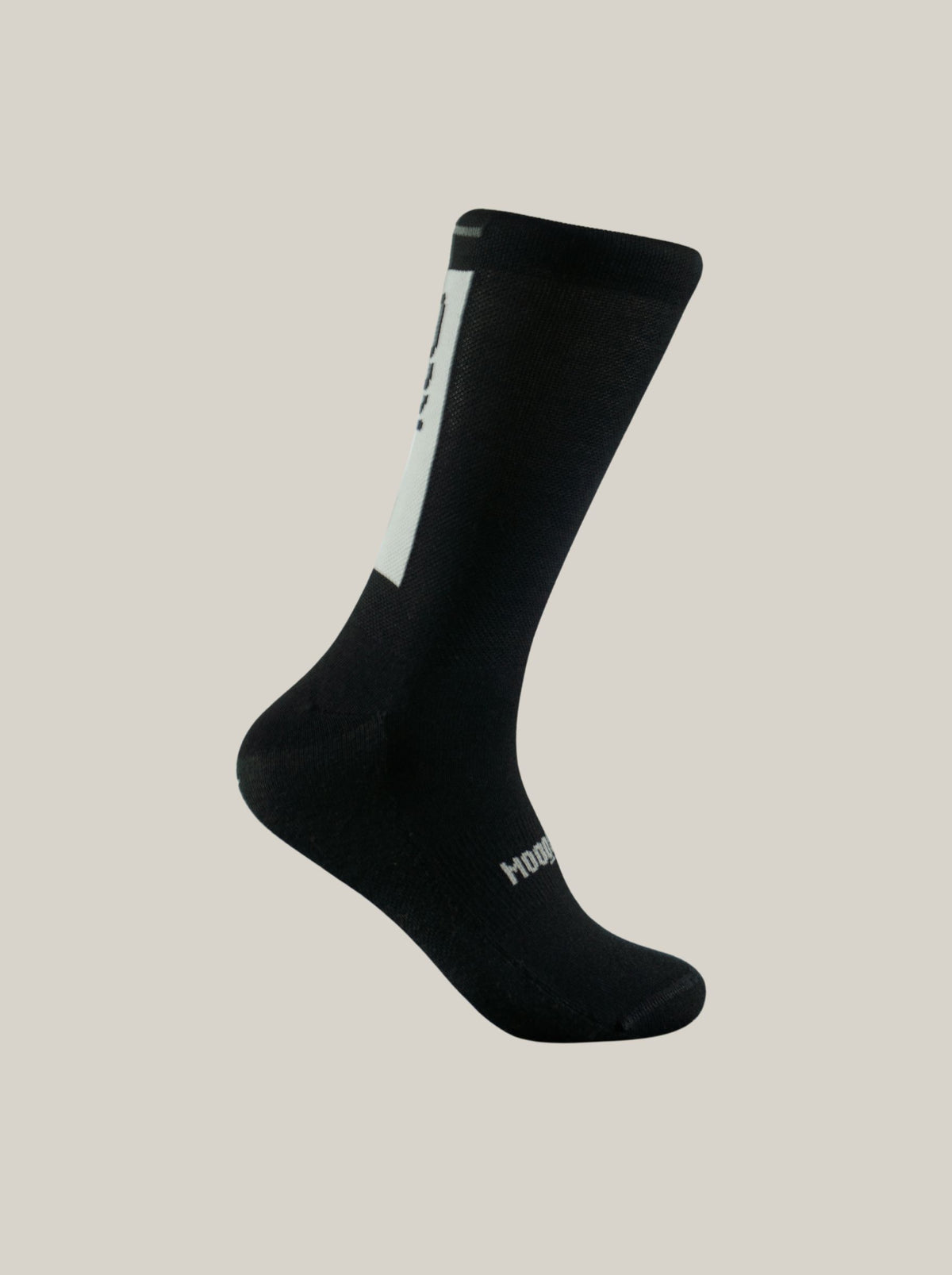
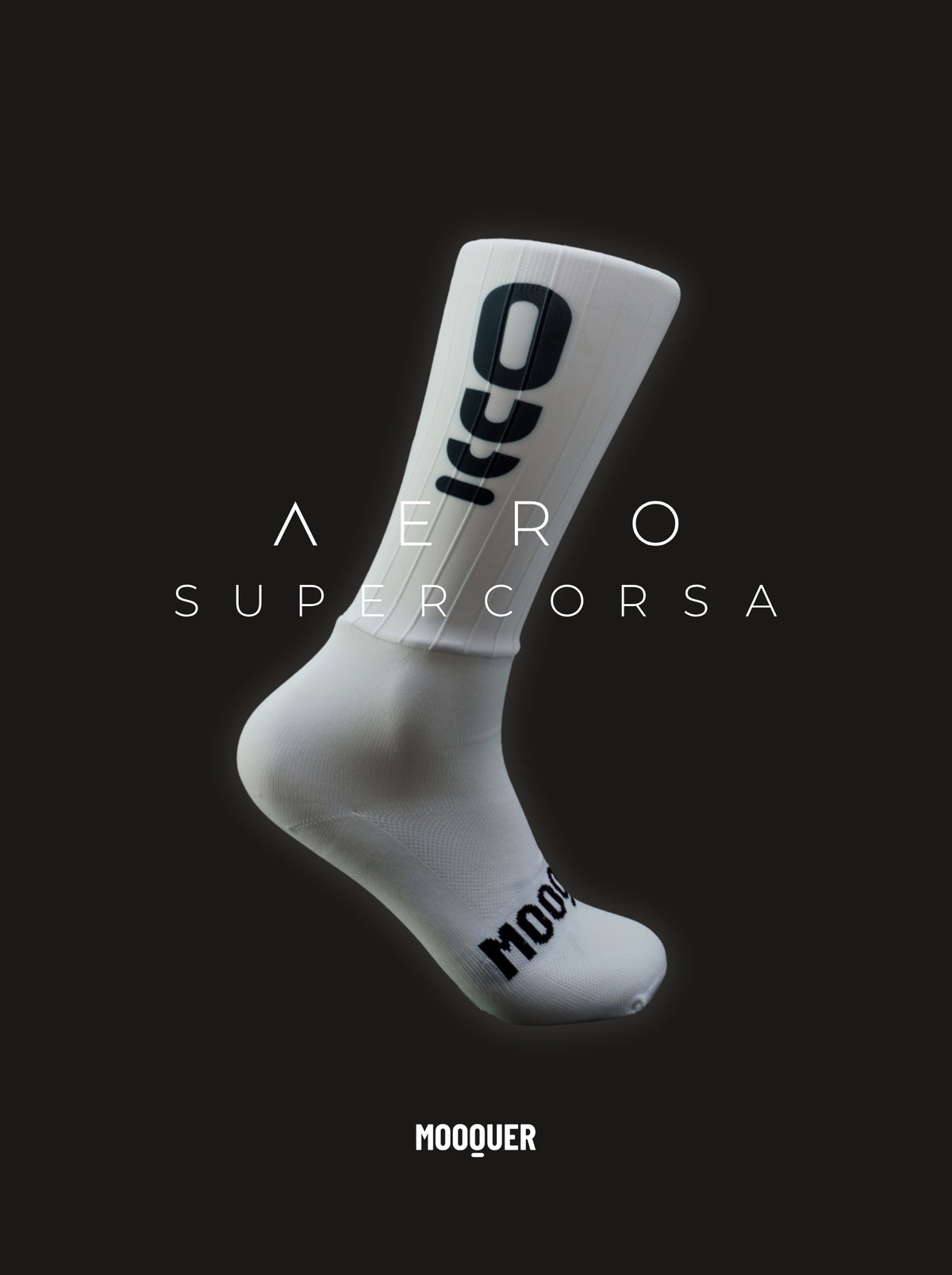
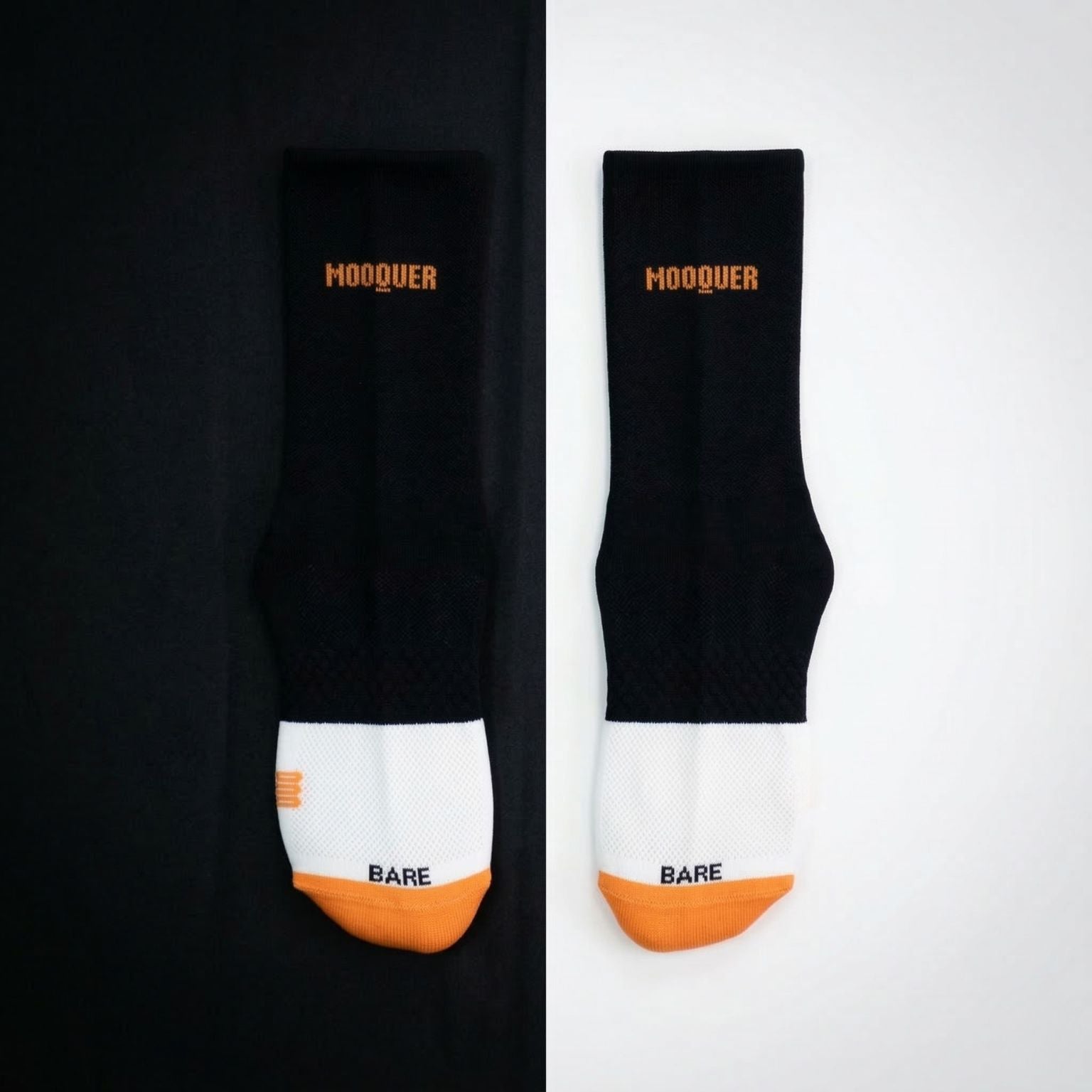
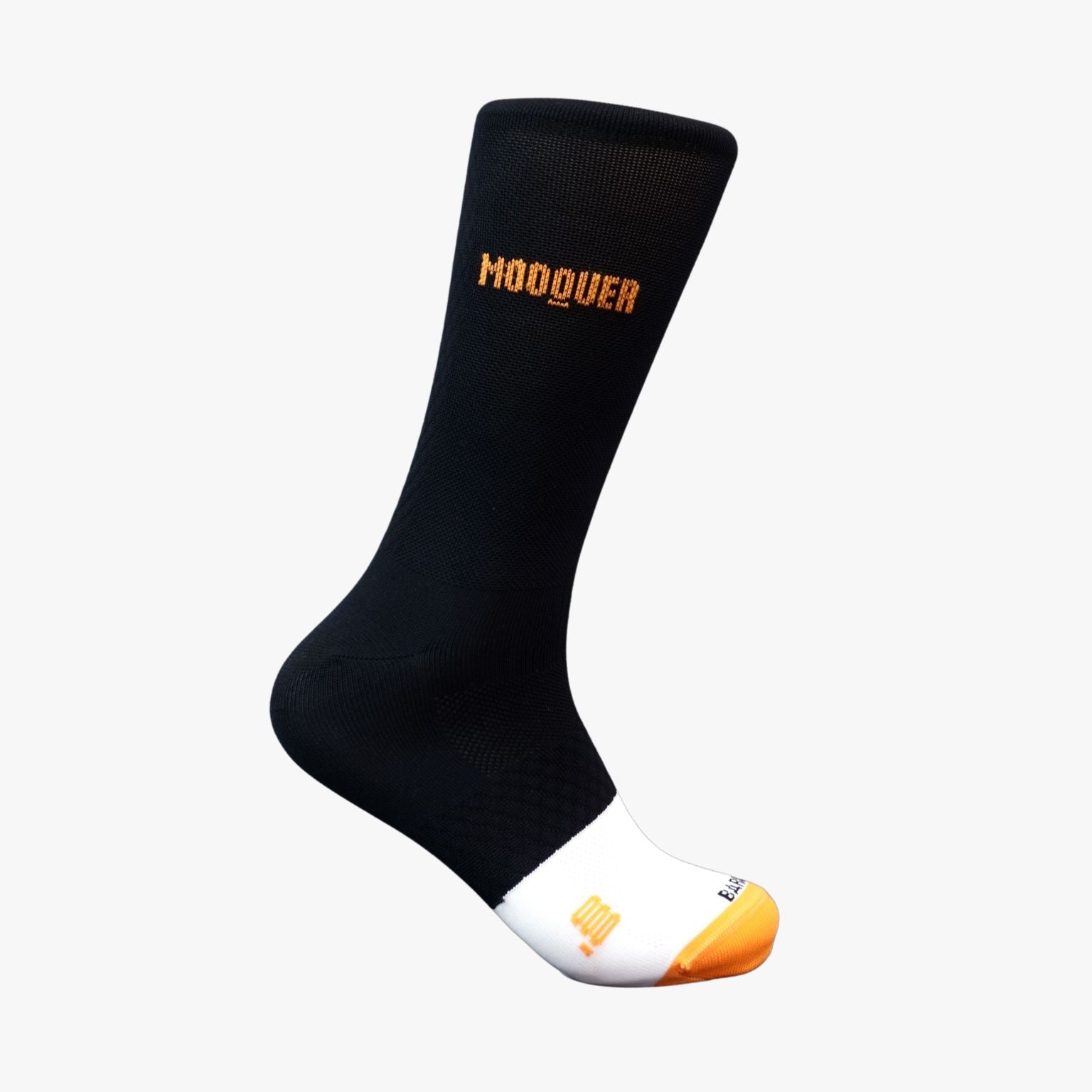
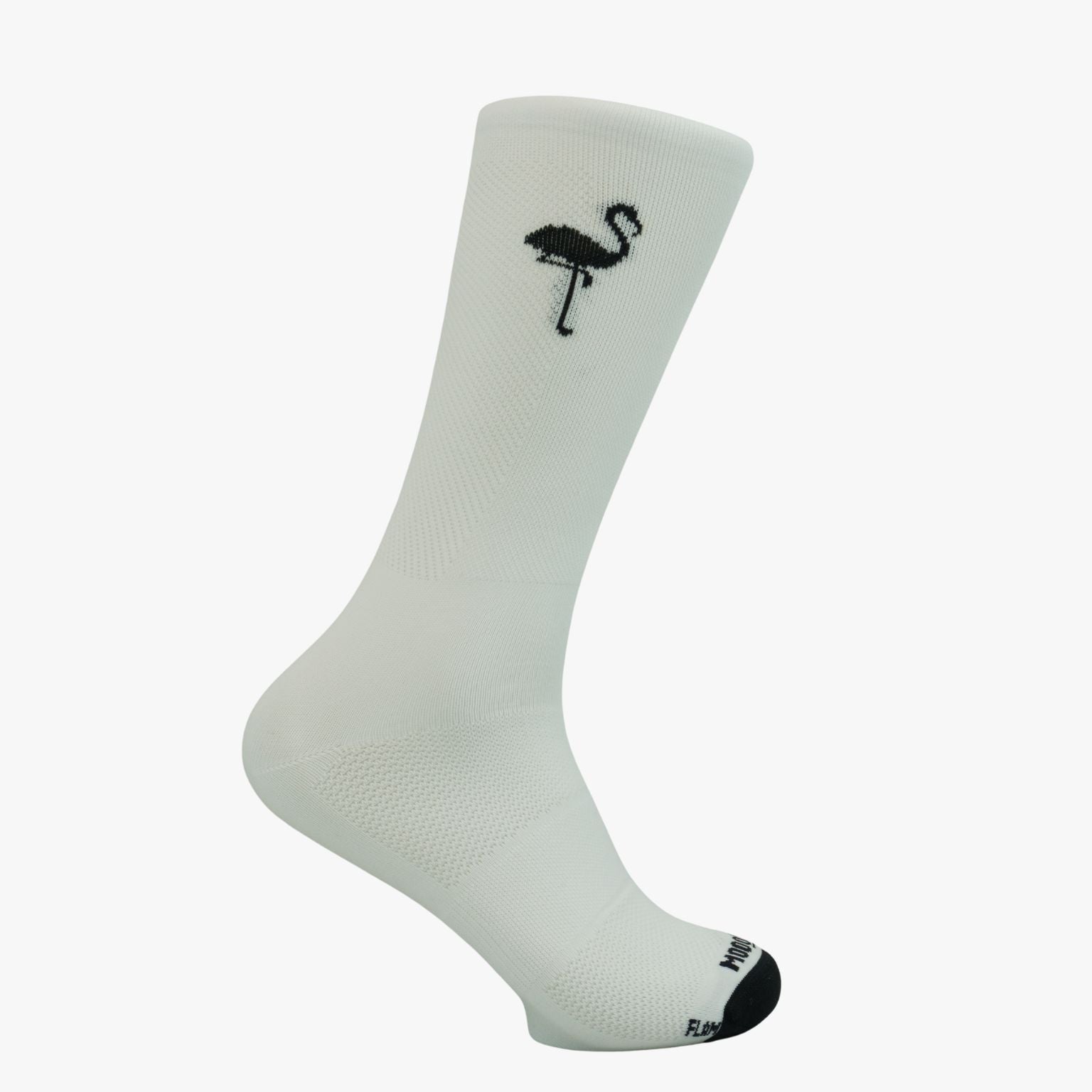
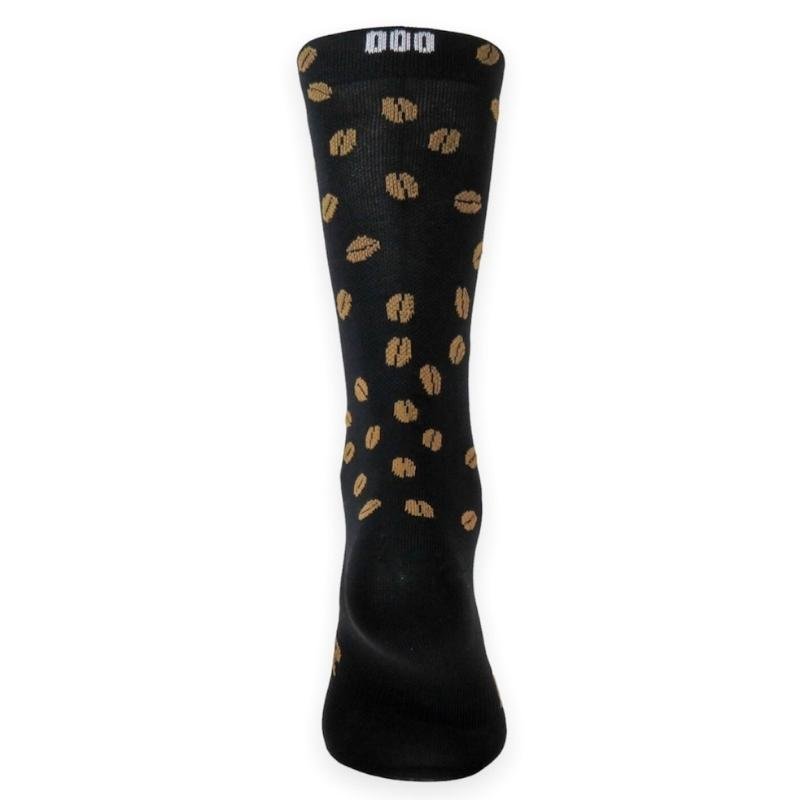
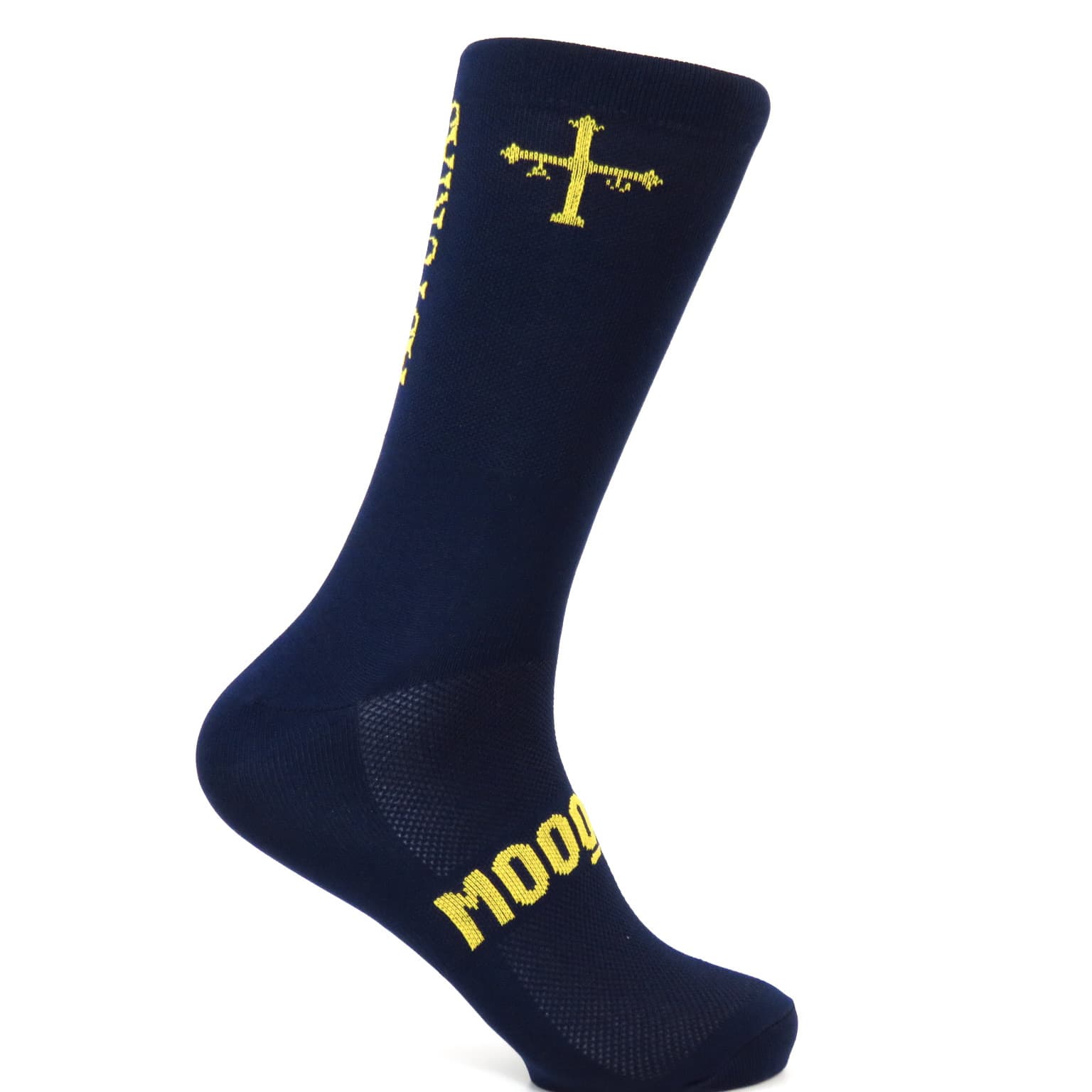
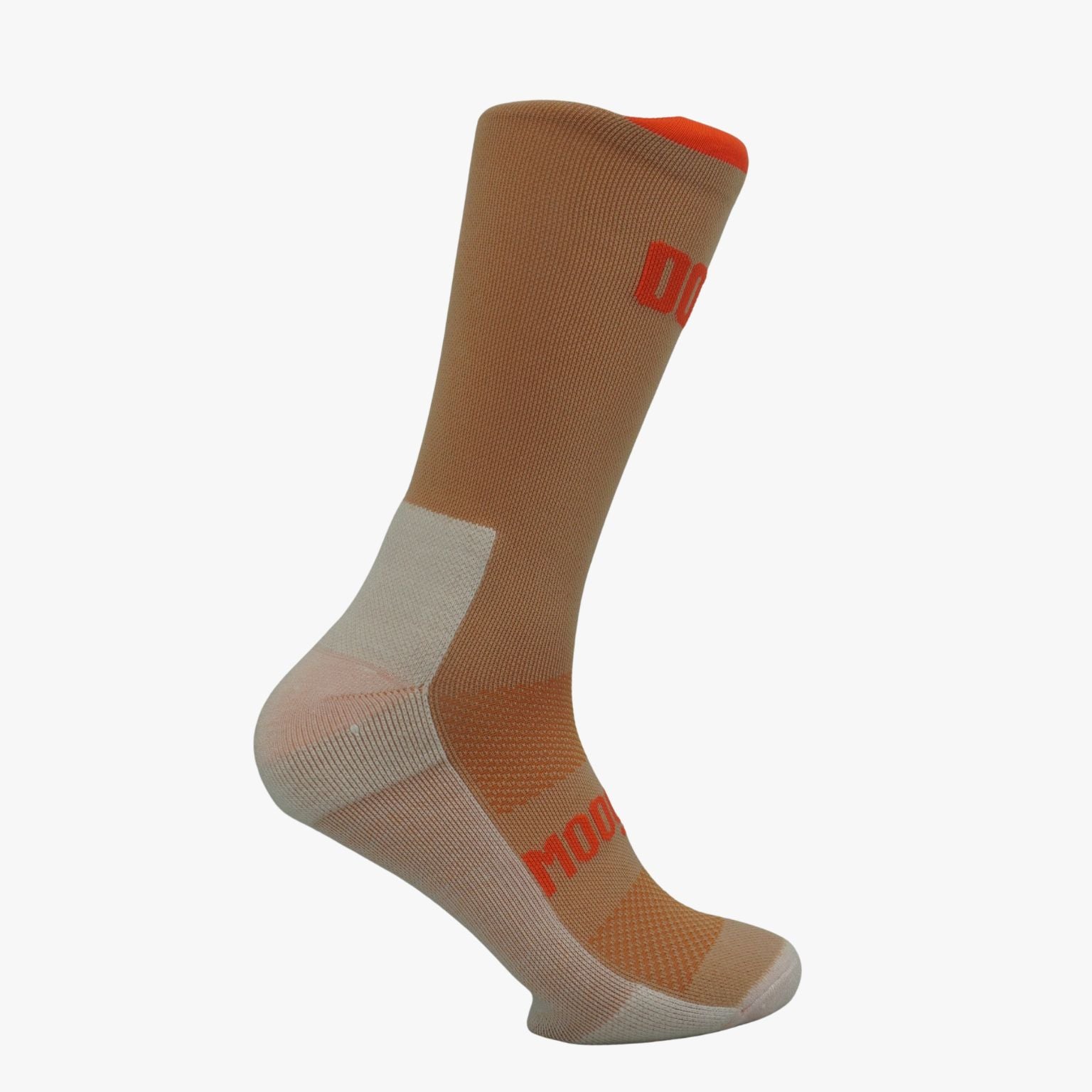
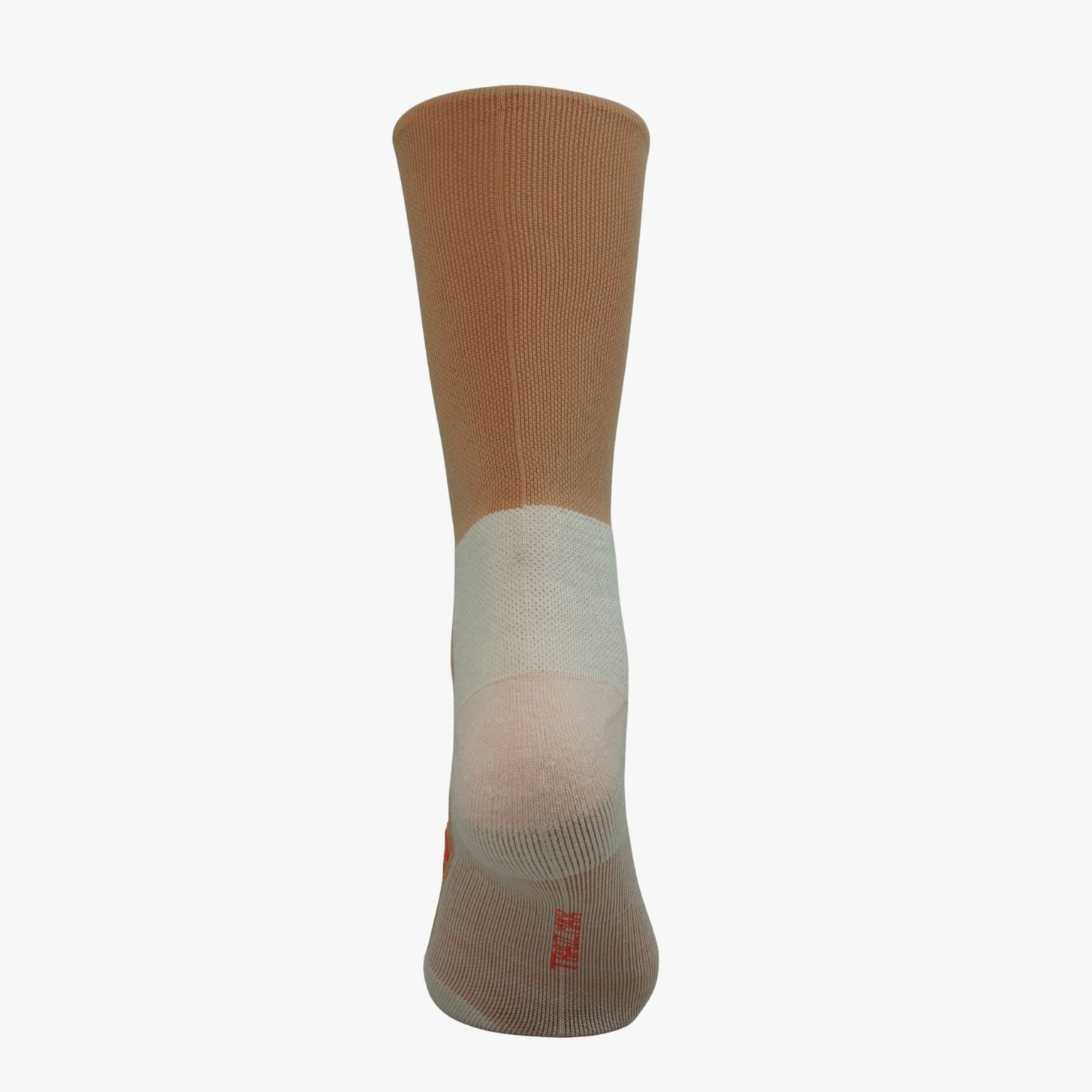
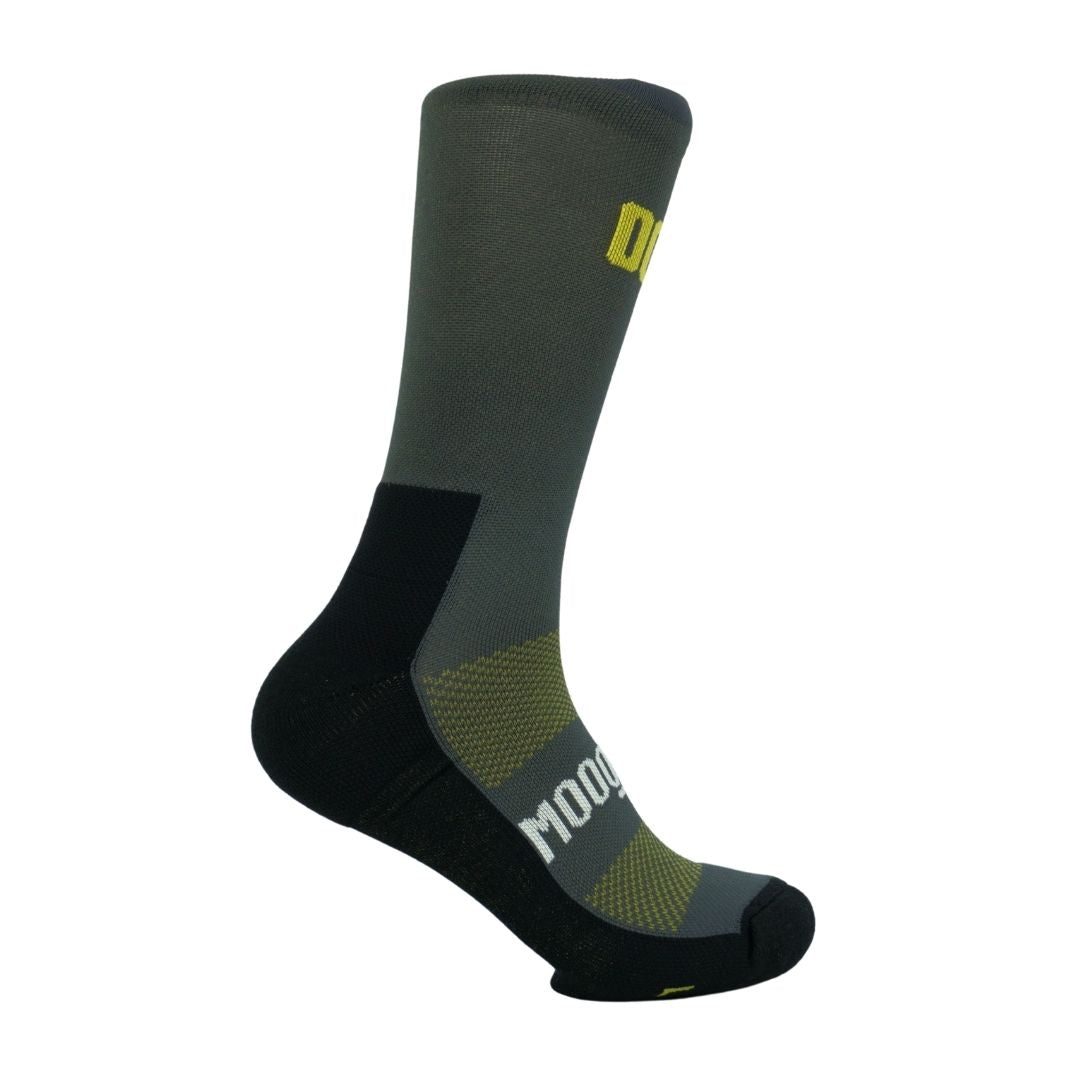
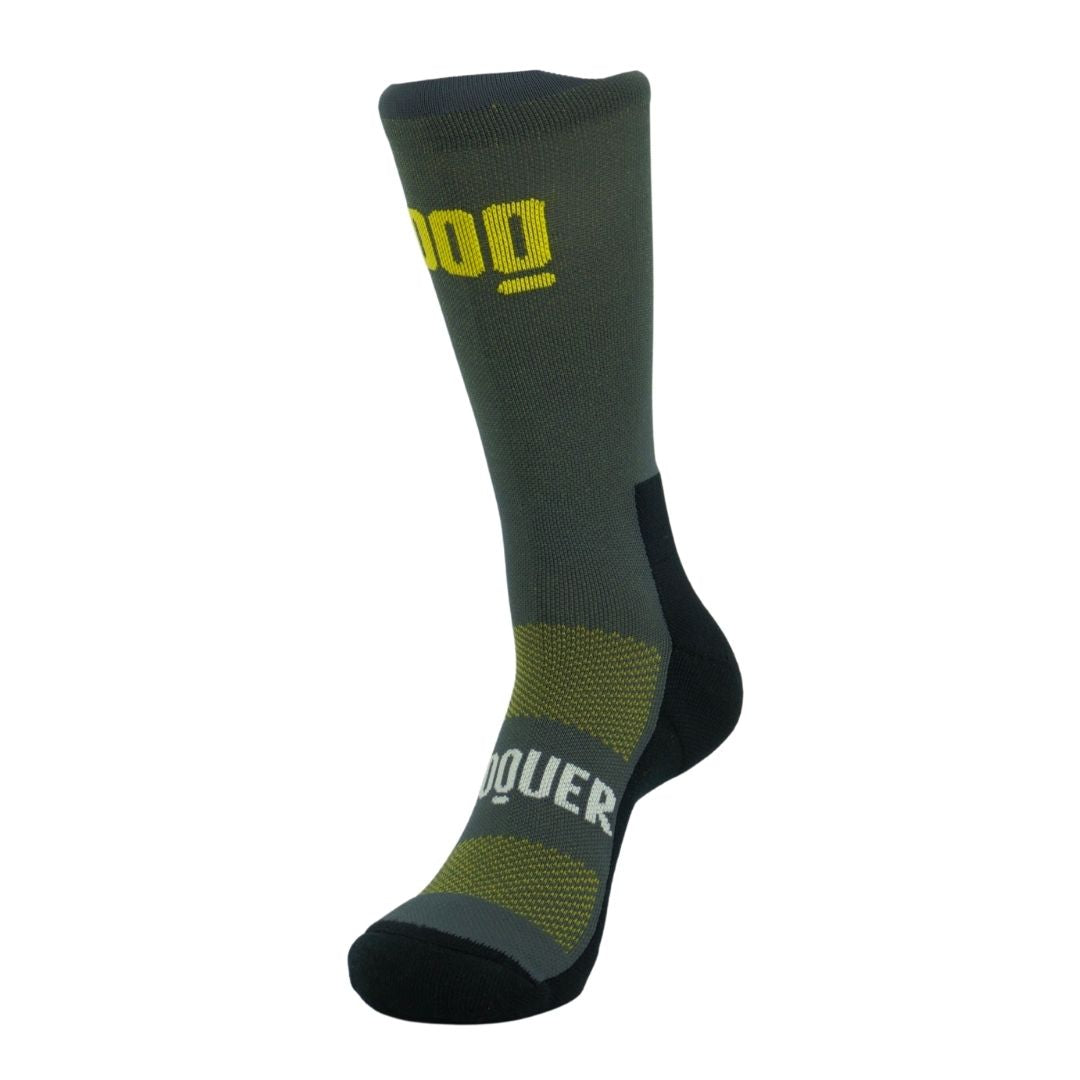
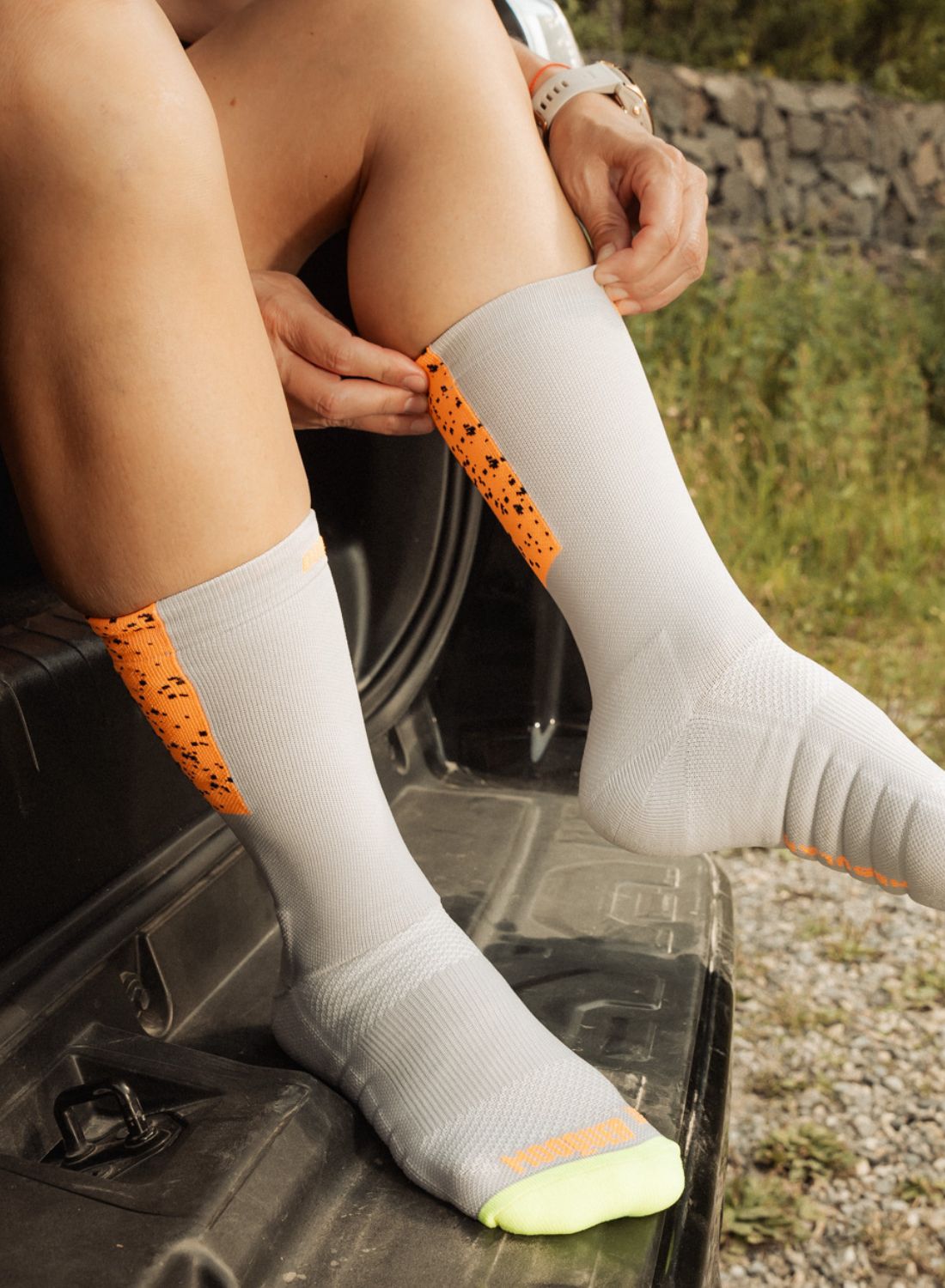
In our catalog, the Beacon thermal cycling socks feature reflective thread on the back of the leg, with Thermolite and a copper sole for the hardest cold, and the Ember merino wool socks, for a wider temperature range.
An honest nuance
Most of this research comes from the same Australian group, and the most solid studies measure ankles and knees together. How far the benefit of the ankle alone goes is still an open question that the authors themselves point out.
What is clear, and is repeated in all the works, is the direction: reflective material placed where there is human movement works much better than the same amount of material placed on a still surface.
Frequently asked questions
Is a reflective vest mandatory on a bicycle in Spain?
It is mandatory to wear a reflective garment or element when riding on an interurban road and lights are mandatory, not a specific vest. Any visible retroreflective element suffices.
Why does reflective material on the ankle work better?
Because the brain recognizes human movement before a static shape. A pedaling ankle draws a pattern that the driver interprets as a person almost immediately.
Is fluorescent yellow useful at night?
No. Fluorescent material needs ultraviolet light and works during the day. At night, what works is the retroreflective material.
Do I need to carry lights if I have reflective material?
Yes. They are different and complementary obligations: white light in front and red in back when riding at night.












Leave a comment
This site is protected by hCaptcha and the hCaptcha Privacy Policy and Terms of Service apply.